

ECA's Romascanu: Romania has a relatively comprehensive RRF anti-fraud framework

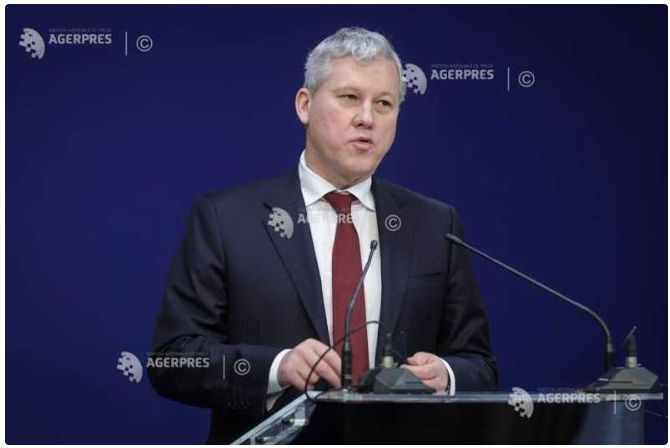
Romania has set in place a relatively comprehensive anti-fraud framework for the Recovery and Resilience Facility (RRF), with fraud-detection measures largely aligned with those used for EU structural funds. However, shortcomings remain, particularly regarding the timing of risk assessments and the systematic use of data analysis, Lucian Romascanu, a member of the European Court of Auditors since July 2025, told AGERPRES.
'Romania has established a fairly comprehensive anti-fraud framework for the RRF, with an active coordinating body, structured fraud-risk assessments and detection measures broadly aligned with EU structural-fund practices. Still, several key elements were introduced late, often following Commission audits, and deficiencies persist in the timing of risk assessments, the systematic use of data analysis and the monitoring of data uploaded to Arachne (an integrated IT tool for automated data search and analysis designed to identify projects, beneficiaries, contracts, and contractors that may be vulnerable to fraud, conflicts of interest, or irregularities - ed. note),' he said.
Romascanu's remarks follow the publication on Wednesday of a European Court of Auditors report assessing the effectiveness of anti-fraud systems put in place by the European Commission and four member states - Denmark, Spain, Italy and Romania -to protect EU financial interests under the RRF.
Romascanu noted that Romania's coordinating body (the NRRP Interministerial Coordination Committee) plays an active role in designing and implementing the RRF anti-fraud framework. It sets requirements and provides guidance to implementing bodies, including on reporting suspected fraud, conducting self-assessments and using detection tools. It has also developed checklists to monitor compliance.
'Following Commission financial-interests audits, both the coordinating body and implementing bodies updated several procedures, including fraud-risk assessment templates, whistleblowing channels, codes of ethics and anti-fraud policies. These improvements show the positive impact of Commission audits on Romania's system,' he added.
Romania was selected for the audit based on several risk indicators, including the number of EPPO cases linked to the RRF, critical findings from Commission audits, the size of its RRF allocation and the volume of payments made by July 2024.
The audit examined the anti-fraud systems of the coordinating body, the audit authority and two implementing bodies selected based on previous risk profiles.
'Romania has a structured anti-fraud framework, with strong involvement from the coordinating body and audit practices aligned with EU structural funds. Commission audits were a key driver of improvements, though some were introduced late,' Romascanu said, noting that implementing bodies use the Commission's fraud-risk model.
Romanian implementing bodies apply a fraud-control approach similar to that used for EU structural funds, combining regular administrative checks with risk-based controls. Anti-fraud checks cover all major risk areas, and specific checklists target fraud indicators in public-procurement contracts.
'RRF bodies in Romania have clear whistleblowing channels that allow individuals to report misconduct while protecting their identity. Anonymous reporting is available in most implementing bodies; one introduced it only after the audit. Romania is also cited as a best-practice example for external communication and whistleblowing mechanisms,' Lucian Romascanu added.
In Romania, the coordinating body recommends that implementing bodies use Arachne only when there are indications of possible fraud. One implementing body defined from the start when Arachne should be used during a project's lifecycle; the other did so only in 2025, after the Court's audit.
'By May 2025, Romania had uploaded almost 8,000 RRF projects to Arachne, far fewer than other member states. Unlike Italy, Romania lacks a comprehensive overview of all RRF project uploads, which reduces the effectiveness of data-based fraud detection,' the ECA member said.
All of Romania's selected implementing bodies had anti-fraud policies, but, as in several other member states, some were adopted only after the first payment request was submitted to the Commission, reducing assurance that adequate safeguards were in place from the start.
According to the European Court of Auditors report, the EU's post-pandemic Recovery and Resilience Facility still shows significant weaknesses in detecting, reporting and correcting fraud. Another vulnerability stems from the fact that member states must recover fraudulently used funds from final beneficiaries, but are not required to return them to the EU budget, meaning EU finances are not as well protected as they could be, the auditors noted. AGERPRES (RO - writing by: Andreea Marinescu; EN - writing by: Simona Klodnischi)
The content of the www.agerpres.ro website has the exclusive purpose of public informing.
All the information published on this website by AGERPRES is protected by relevant legal dispositions.
It is forbidden to copy, reproduce, recompile, decompile, distribute, publish, display, modify, create derived components or products or full services, as well as any exploitation of the site's content.
Details in the section Terms of Use. If you are interested in picking up AGERPRES news items, please contact the Marketing Department – marketing@agerpres.ro.
The use of the Comments section entails your obligation to respect the AGERPRES terms and conditions in regards to the publishing of comments on the www.agerpres.ro.
Other news in category
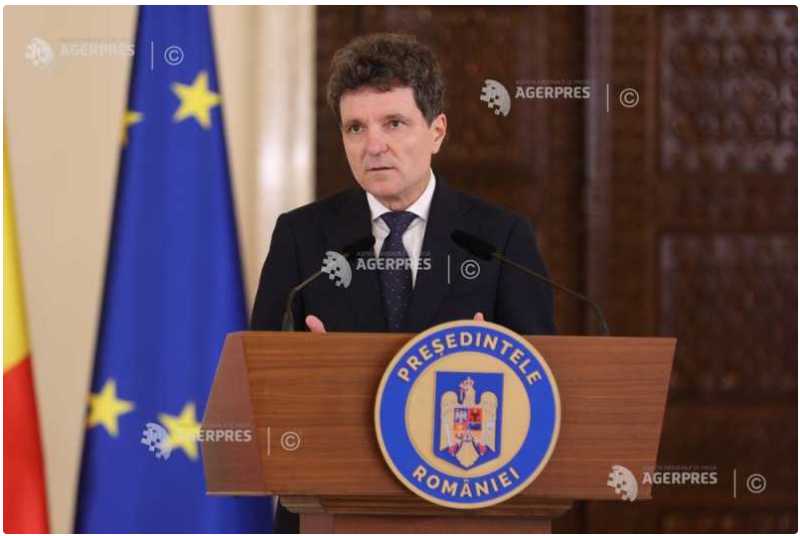
President Dan: Former governing coalition parties failed to reach consensus on public-sector pay law
President Nicusor Dan said on Wednesday that the parties of the former governing coalition did not reach a political and social agreement on the new public-sector pay law and have jointly accepted the loss of the €770 million linked to this NRRP milestone. Nicusor Dan said the Presidential Administration has mediated talks between PSD, PNL, USR and UDMR s

FABC: Missing oncology medicines, supply disruptions pose direct threat to patients' lives
The Federation of Romania's Cancer Patients Associations (FABC) has sent an open letter to acting Prime Minister Ilie Bolojan and president of the National Health Insurance Office (CNAS) Horatiu Moldovan, warning that the absence or repeated supply disruptions of oncology medicines represent a direct risk to patients' lives. FABC says three oncology me

Romanian engineers remain at forefront of power sector technologies, CIGRE Romania president says
AGERPRES special correspondent Nicoleta Gherasi reports: The technical component is overwhelmingly dominant at the CIGRE 2026 Paris Session, while Romanian engineers continue to rank among the sector's leading specialists, CIGRE Romania President Ciprian Diaconu said on Wednesday. 'One new element is the very large number of participants compared with

Volker Reiter: This year's ProEtnica Festival was saved by minority organisations and participants
The 22nd edition of the ProEtnica Intercultural Festival, which opened on Wednesday in the Medieval Citadel of Sighisoara, marking 25 years since its establishment, was saved by national minority organisations and participants, Volker Reiter, director of the Interethnic Educational Centre for Youth (ibz) Sighisoara, said at the opening ceremony. 'I do not

Romania's first Parasport Games to bring together more than 300 athletes
More than 300 athletes will take part in the first edition of the Parasport Games Romania, a multisport competition bringing together 10 disciplines and due to be held at seven sports venues in Bucharest from September 1 to 5, President of the Romanian Paralympic Committee Eduard Novak announced at a press conference on Wednesday. 'September 1 is the Offic

Interim ForMin Toiu meets Romanian community in Frankfurt, Bonn, Wiesbaden, Hesse
Interim Foreign Affairs Minister Oana Toiu paid a visit to Germany on Tuesday, travelling to Bonn, Frankfurt and Wiesbaden, where she met with representatives of the Romanian community, Romanian entrepreneurs and German officials, according to the Foreign Affairs Ministry (MAE). In Wiesbaden, Oana Toiu held a meeting with Manfred Pentz, Minister of Federal, Eu
Romania receives first EUR2.5 billion payment under SAFE defence instrument
Romania on Wednesday received its first payment of EUR2.5 billion under the Security Action for Europe (SAFE) defence instrument, representing 15% of its total allocation of EUR 16.7 billion, the European Commission reported on Wednesday. According to a European Commission press release, SAFE is a EUR150 billion financial instrument providing loans to member s

'Bridging Cultures' - musical bridge between Oradea and Debrecen
A series of music and cultural events will bring together artists from Oradea and Debrecen as part of the cross-border 'Bridging Cultures' project, dedicated to the 250th anniversary of the establishment of the Greek-Catholic Diocese of Oradea, which will be marked next year. The project will run for one year and was initiated by the Greek Catholic Dio
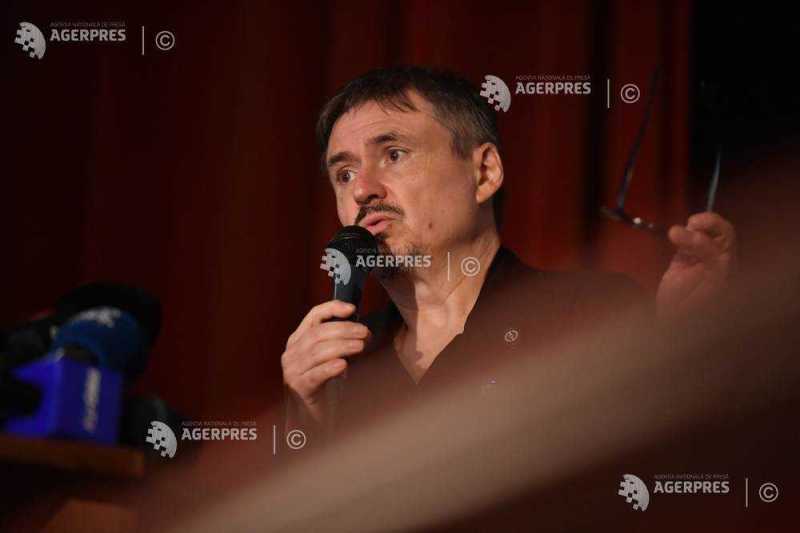
Mungiu's 'Fjord' to be presented at Oslo/PIX Film Festival
'Fjord,' directed by Cristian Mungiu and winner of the Palme d'Or at the 2026 Cannes Film Festival, will close the Oslo/PIX Film Festival, a film event taking place in the Norwegian capital until 30 August. According to a press release sent by the Romanian Cultural Institute (ICR) on Wednesday, the film will have three screenings attended by the di

Bucharest National Theatre - new repertory strategy, structured around seven major programmes
The new repertory strategy of the 'I.L. Caragiale' National Theatre (TNB) in the capital will be structured around seven major programmes, with the aim of strengthening its status as Romania's leading stage. According to a TNB release sent to AGERPRES on Wednesday, the main aim of the new strategy is to establish a permanent and open dialogue with

CFA Romania's Codirlasu: Confidence indicator rose in July, with the risk of recession remaining
The confidence indicator rose in July, amid the confirmation of Romania's investment-grade rating by rating agencies, but the economy will continue to stagnate, pointing to a high risk of recession, according to Adrian Codirlasu, President of CFA Romania. 'The confidence indicator rose in July, amid the confirmation of Romania's investment-grade ra
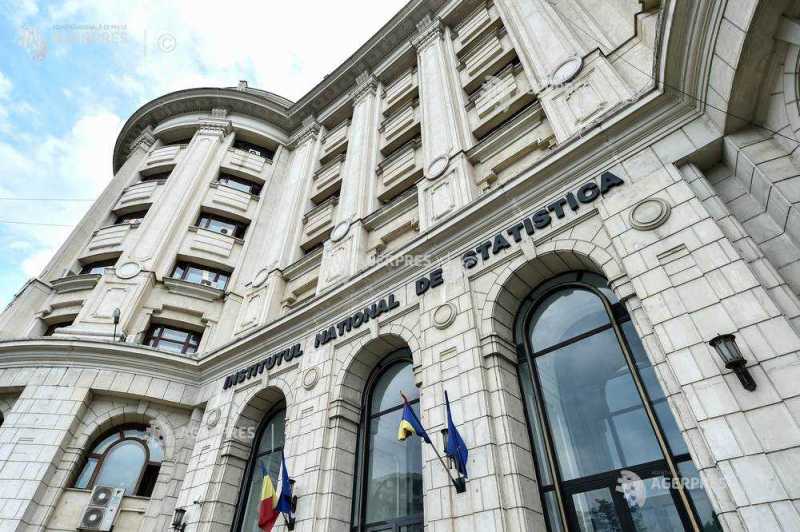
INS: Wholesale trade turnover up 0.8% in first half of 2026
Turnover in wholesale trade (except trade in motor vehicles and motorcycles) increased in the first half of this year, both as gross series (+0.8%) and as a series adjusted according to the number of working days and seasonality (+0.6%), compared with the same period in 2025, according to the National Institute of Statistics (INS) data published on Wednesday.

Interim PM Bolojan estimates special-authorisation medicines issue to be resolved within days
Interim Prime Minister Ilie Bolojan estimates that all the issues related to the supply of medicines which require special authorisations for cancer patients should be resolved within a few days. 'I understand for the House [National Health Insurance House] - because I have sought to keep informed and see what the issues are at all times - most of them, ov

Gov't to launch selection process for new Nuclearelectrica CEO after Cosmin Ghita's resignation
Following Cosmin Ghita's announcement that he resigns as Nuclearelectrica CEO, the government said that after the notice period, a selection process will be launched to appoint a new head of the nuclear power producer. Government spokesperson Ioana Dogioiu said on Tuesday that 'resignation is a unilateral act of will' and that Ghita's contract
IntMin Predoiu hails seizure of 1.7 tonnes of high-risk drugs as major Interior Ministry success
The seizure of 1.7 tonnes of high-risk drugs in recent days is an important success for the Interior Ministry and the Romanian Police's anti-drug units, acting Minister of the Interior Catalin Predoiu said on Tuesday. He noted that combating drug trafficking has been a priority for the Ministry ever since he took over the portfolio. 'We