

EU ramps up fight against drug trafficking as consumption and crime rates spike (enr)

As Europe warns it is hitting a drug-crime tipping point, the European Commission unveils a tougher strategy and a new 2026-2030 action plan aimed at fighting back against drug production, trafficking and use.
The European Commission on Thursday said Europe is facing significant security, health, environmental and social challenges related to the trafficking and use of illicit drugs. To safeguard citizens' wellbeing and tackle the problem at its source, it unveiled an EU Drugs Strategy and an Action Plan against drug trafficking.
'When it comes to illegal drugs, Europe is reaching a crisis point,' stated Magnus Brunner, European Commissioner for Internal Affairs and Migration, at a press conference in Brussels on Thursday.
'Today we are taking urgent action to change direction. With today's EU Drugs Strategy and Action Plan, we send the drug lords and their organisations a very clear message: Europe is fighting back,' he added.
The younger generations are the most vulnerable, Brunner said, both to drug use and to being drawn into drug distributing and criminal networks. The Commission proposes prevention initiatives and the promotion of reintegration to raise awareness from a public health perspective. It will also seek to equip member states with a new EU toolbox addressed to minors and a common handbook aimed to dismantle illicit synthetic drug production sites.
The new EU Drugs Strategy and the Action Plan Against Drug Trafficking are key deliverables of the European Internal Security Strategy, ProtectEU, presented by European Commission President Ursula von der Leyen. The 19-point strategy and plan set the guidelines from 2026 to 2030.
In order to enhance preparedness and response, new systems have been developed to improve alert and early warning systems. Threat assessments on highly potent synthetic opioids will also be conducted, and a new Security and Innovation Campus will be launched in 2026.
Security remains a cornerstone of the Commission's strategy, counting on the cooperation of agencies such as the EU's border management agency Frontex, launching a new Ports Strategy and stricter rules against organised crime, drug production, trafficking and criminal infiltration.
Within this framework, updated rules on monitoring and controlling drug precursors are proposed. The European Union Drugs Agency (EUDA) will also create a new EU-wide substance database to support member states in identifying new synthetic drugs and drug precursors.
Drug precursors are chemicals necessary for the illicit production of drugs, and are the main raw materials for amphetamine and MDMA, commonly known as ecstasy, but also widely used for pharmaceuticals or textile purposes. However, with the rapid rise of designer precursors without any known legitimate use, new tailor-made legislation was needed.
New drugs, new threats
The European drug market is evolving rapidly as both suppliers and consumers are finding ways to adapt to geopolitical instability, globalisation and technological advances, according to the European Drug Report 2025 published by the EUDA in June.
In addition, the report highlights the increased integration of new stimulants - such as synthetic cathinones and highly potent synthetic opioids - into Europe's illicit drug market, alongside the disturbing increase in the use of more commonly used illicit substances, such as cannabis and cocaine.
This poses evolving challenges in terms of the sensitivity of existing monitoring systems to emerging harms and the appropriateness of existing responses at national and European levels, the report said.
Despite numerous positive developments introduced by the current drugs framework, the Commission's evaluation of the EU drugs strategy 2021-2025 found that the EU drugs landscape has worsened over the past five years in a number of ways.
It particularly hones in on increased criminal infiltration. The report said 419 tonnes of cocaine were seized in 2019, six times more than a decade ago - and the risk of drug-induced deaths and mental health problems have augmented considerably.
In addition, drug organisations are exploiting Artificial Intelligence (AI) to optimise trafficking operations, enhancing ties with international criminal networks, particularly from Latin America, and using corruption and violence as a service, the report said.
Brunner considers stronger partnerships with third countries to be key, especially within Latin America, and mentioned joint efforts with Colombia, where a knowledge-transfer from the European Ports Alliance detection strategy is taking place. 'In my opinion, the fight against trafficking should start before it gets to our countries,' he said.
Member states sound the alarm
Across member states, a wave of urgency is taking shape as a result of the increasing illegal drug trafficking and related crime.
Bulgaria reported a record surge in drug seizures during the first five months of 2025, Interior Minister Daniel Mitov said. According to the General Directorate for Combating Organized Crime (GDCOC), confiscated quantities were already three times the amounts of those seized in all of 2024. Investigations show a worrying trend of children and teenagers being drawn into drug distribution. Mitov also warned that lifetime drug use among Bulgarians aged 15-64 increased by 30 percent between 2020 and 2024.
In neighbouring Romania, drug use and trafficking - particularly involving synthetic substances - remain a national security concern influenced by both domestic developments and transnational criminal networks. A recent meeting of the Supreme Council of National Defence in November reaffirmed the need for coordinated institutional action.
In Slovenia, there are more than 500 different substances on the list of banned drugs. According to the latest data from the National Institute of Public Health (NIJZ), accessibility to drugs is increasing, and a slightly different pattern of substance use than in the past is being observed among young people, partially linked to social anxiety and isolation during the Covid-19 pandemic. Nevertheless, the Slovenian police detected a significant decrease in criminal offenses related to production and trafficking of illicit drugs.
The French Interior Ministry's statistical service (SSMSI) published an initial assessment on drug trafficking and use on Wednesday, which shows a rise since 2016. Cannabis was presented as the main drug sold (78 percent of those charged with trafficking) and consumed (92 percent of users) in the country from 2016 to 2024, with cocaine and ecstasy trafficking rapidly growing.
While drug-related homicides often make front-page news in cities struggling to battle drug crime, such as Marseille, the recent murder of the 20-year-old brother of Amine Kessaci, an anti-drug activist, sparked nationwide calls to confront drug crime. Interior Minister Laurent Nuñez called the crime a 'turning point' and President Emmanuel Macron urged France to step up its actions and use the same approach it has used against 'terrorism'.
Macron also accused urban middle class drug users of fuelling a narcotics-driven crime wave while complaining about its consequences.
Made in Europe — or shipped in?
The Netherlands is one of the leading countries in Europe, as an importer of cocaine, and also as a producer of numerous other drugs, according to the EUDA's annual report. For instance, it is a hub in the European MDMA trade, and a main player in the manufacturing of speed (amphetamine) as well as heroin, as data from dismantled production facilities shows.
However, the EUDA said the amount of intercepted drugs, and the number of arrests of drug traffickers, fell sharply by almost half in 2024.
A significant decrease was also seen in the port of Antwerp last year, the EUDA said. For instance, Belgian customs seized 16.7 tonnes of cocaine in the Antwerp port area during the first half of this year, which is 5 tonnes less than in the same period in 2024. During the same period, there was a significant increase in the amount of cocaine seized in South America that was destined for Belgium.
However, 'the beast is not gone', said Kristian Vanderwaeren, Director General of Belgian customs at the Ministry of Finance. According to officials in Belgium, criminals are spreading their risks by reducing the quantities, a trend that has been noticeable for some time.
Customs authorities believe that some of the drug trafficking in the Benelux countries has shifted to France and Spain, as the amount of seized drugs doubled in France last year.
Spain, due to its geographic location, port and air capacity and links with Latin America, North Africa, and Europe, is a logistics hub for both legal and illicit trade, especially cocaine and cannabis. According to the National Strategy Against Organized Crime and Serious Crime 2025, there has been a 'notable increase' in cocaine seizures at national and European ports in recent years, and drug seizures in hand luggage, containers and air freight are also 'increasingly frequent' at airports, 'in quantities never seen before'.
Spain's Strategy aims to prevent, detect, prosecute, and mitigate organized crime in the field. The Mediterranean state is however not the only country actively tackling the risks of drug trafficking and use.
How states are fighting back
Authorities in Albania, an EU candidate country, have taken several measures to combat drugs, such as strengthening border controls, destroying cannabis plantations and increasing cooperation with international agencies like Europol and Interpol. Stricter laws have also been enacted to prohibit the production and distribution of drugs, while efforts are being made to educate young people about the consequences of drug use.
In Croatia, the Ministry of Health and the Croatian Institute of Public Health coordinate the implementation of the National Action Strategy in the field of addiction for the period up to 2030. They place special emphasis on investments in prevention in order to break the vicious circle of addiction, poverty and organised crime. The Ministry of the Interior recently announced also that Croatia plans to establish a national multi-agency center to combat smuggling in real time.
Romania's commitment to protecting communities, especially its youngest members, is embodied by a higher control over chemical precursors, extending the national monitoring and reporting system and improving access to treatment. Authorities have also dismantled several cross-border trafficking groups.
Following that same line, Bulgaria's Border Police launched a large-scale international operation against trafficking along the country's borders in early November. The mission focused on tracking and neutralising illegal trafficking of people, drugs, and excise goods through Bulgarian territory.
In France, Nuñez announced on Wednesday that the Pharos platform for reporting illegal content on the internet will be used in the fight against drug trafficking too, in particular to identify websites selling synthetic drugs that are freely accessible to individuals. 'A few days ago, several dozen kilos of synthetic drugs were seized from parcels arriving from the Netherlands,' he said.
France's National Assembly will hold a debate on the fight against drug trafficking on December 17.
The content of this article is based on reporting by AFP, ANP, ATA, Agerpres, Belga, BTA, dpa, EFE, HINA, STA, as part of the European Newsroom (enr) project. AGERPRES (editing by: Simona Klodnischi)
The content of the www.agerpres.ro website has the exclusive purpose of public informing.
All the information published on this website by AGERPRES is protected by relevant legal dispositions.
It is forbidden to copy, reproduce, recompile, decompile, distribute, publish, display, modify, create derived components or products or full services, as well as any exploitation of the site's content.
Details in the section Terms of Use. If you are interested in picking up AGERPRES news items, please contact the Marketing Department – marketing@agerpres.ro.
The use of the Comments section entails your obligation to respect the AGERPRES terms and conditions in regards to the publishing of comments on the www.agerpres.ro.
Other news in category
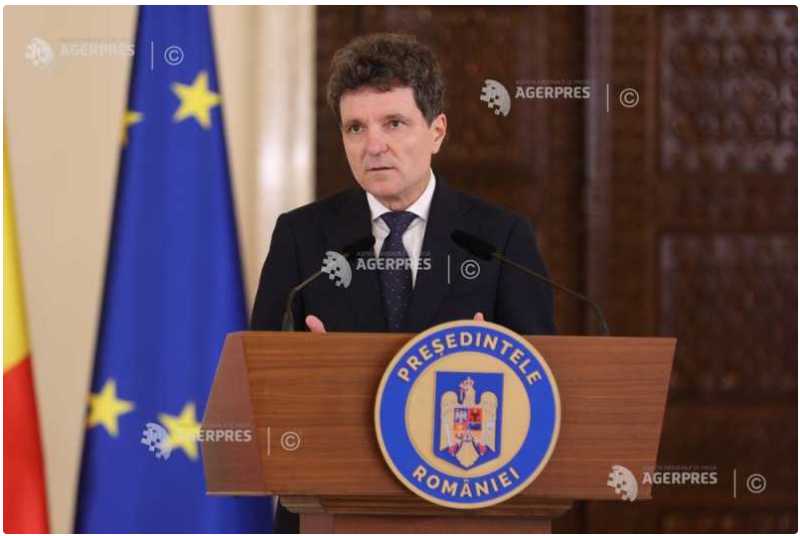
President Dan: Former governing coalition parties failed to reach consensus on public-sector pay law
President Nicusor Dan said on Wednesday that the parties of the former governing coalition did not reach a political and social agreement on the new public-sector pay law and have jointly accepted the loss of the €770 million linked to this NRRP milestone. Nicusor Dan said the Presidential Administration has mediated talks between PSD, PNL, USR and UDMR s

FABC: Missing oncology medicines, supply disruptions pose direct threat to patients' lives
The Federation of Romania's Cancer Patients Associations (FABC) has sent an open letter to acting Prime Minister Ilie Bolojan and president of the National Health Insurance Office (CNAS) Horatiu Moldovan, warning that the absence or repeated supply disruptions of oncology medicines represent a direct risk to patients' lives. FABC says three oncology me

Romanian engineers remain at forefront of power sector technologies, CIGRE Romania president says
AGERPRES special correspondent Nicoleta Gherasi reports: The technical component is overwhelmingly dominant at the CIGRE 2026 Paris Session, while Romanian engineers continue to rank among the sector's leading specialists, CIGRE Romania President Ciprian Diaconu said on Wednesday. 'One new element is the very large number of participants compared with

Volker Reiter: This year's ProEtnica Festival was saved by minority organisations and participants
The 22nd edition of the ProEtnica Intercultural Festival, which opened on Wednesday in the Medieval Citadel of Sighisoara, marking 25 years since its establishment, was saved by national minority organisations and participants, Volker Reiter, director of the Interethnic Educational Centre for Youth (ibz) Sighisoara, said at the opening ceremony. 'I do not

Romania's first Parasport Games to bring together more than 300 athletes
More than 300 athletes will take part in the first edition of the Parasport Games Romania, a multisport competition bringing together 10 disciplines and due to be held at seven sports venues in Bucharest from September 1 to 5, President of the Romanian Paralympic Committee Eduard Novak announced at a press conference on Wednesday. 'September 1 is the Offic
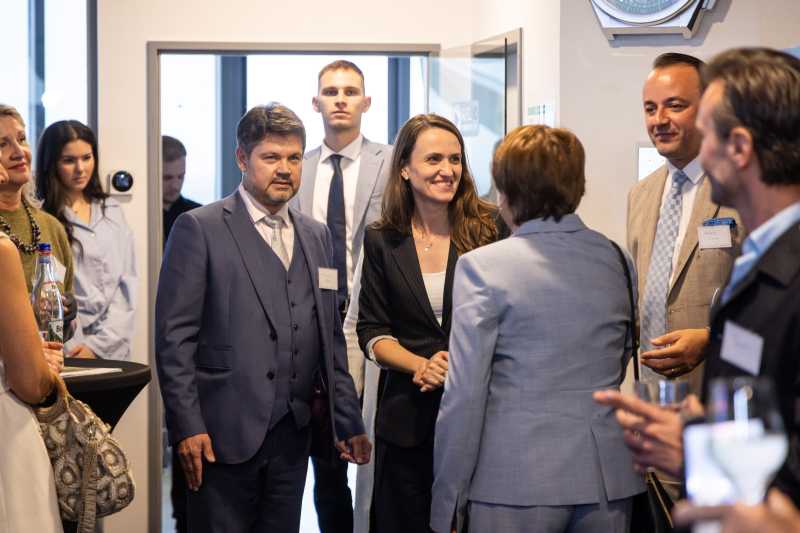
Interim ForMin Toiu meets Romanian community in Frankfurt, Bonn, Wiesbaden, Hesse
Interim Foreign Affairs Minister Oana Toiu paid a visit to Germany on Tuesday, travelling to Bonn, Frankfurt and Wiesbaden, where she met with representatives of the Romanian community, Romanian entrepreneurs and German officials, according to the Foreign Affairs Ministry (MAE). In Wiesbaden, Oana Toiu held a meeting with Manfred Pentz, Minister of Federal, Eu
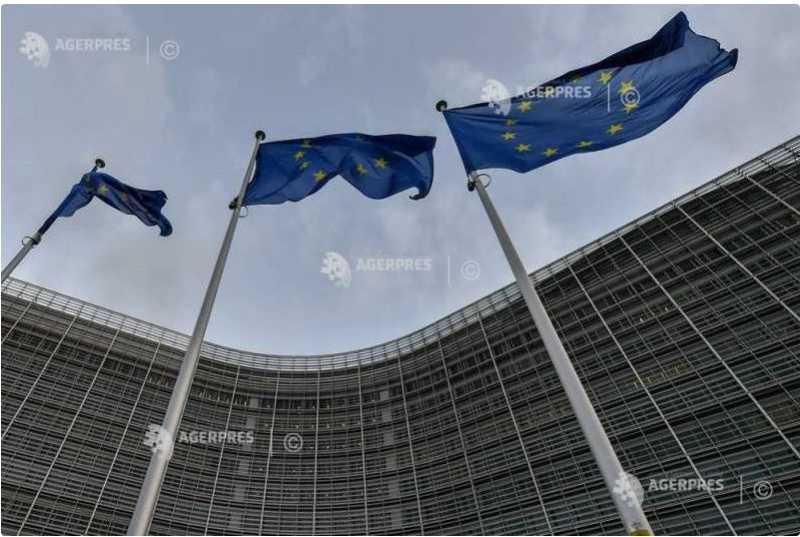
Romania receives first EUR2.5 billion payment under SAFE defence instrument
Romania on Wednesday received its first payment of EUR2.5 billion under the Security Action for Europe (SAFE) defence instrument, representing 15% of its total allocation of EUR 16.7 billion, the European Commission reported on Wednesday. According to a European Commission press release, SAFE is a EUR150 billion financial instrument providing loans to member s

'Bridging Cultures' - musical bridge between Oradea and Debrecen
A series of music and cultural events will bring together artists from Oradea and Debrecen as part of the cross-border 'Bridging Cultures' project, dedicated to the 250th anniversary of the establishment of the Greek-Catholic Diocese of Oradea, which will be marked next year. The project will run for one year and was initiated by the Greek Catholic Dio
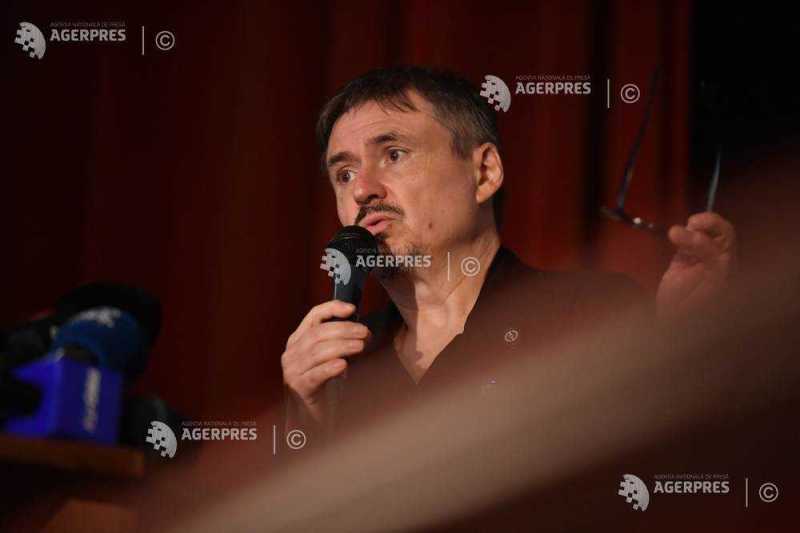
Mungiu's 'Fjord' to be presented at Oslo/PIX Film Festival
'Fjord,' directed by Cristian Mungiu and winner of the Palme d'Or at the 2026 Cannes Film Festival, will close the Oslo/PIX Film Festival, a film event taking place in the Norwegian capital until 30 August. According to a press release sent by the Romanian Cultural Institute (ICR) on Wednesday, the film will have three screenings attended by the di

Bucharest National Theatre - new repertory strategy, structured around seven major programmes
The new repertory strategy of the 'I.L. Caragiale' National Theatre (TNB) in the capital will be structured around seven major programmes, with the aim of strengthening its status as Romania's leading stage. According to a TNB release sent to AGERPRES on Wednesday, the main aim of the new strategy is to establish a permanent and open dialogue with
CFA Romania's Codirlasu: Confidence indicator rose in July, with the risk of recession remaining
The confidence indicator rose in July, amid the confirmation of Romania's investment-grade rating by rating agencies, but the economy will continue to stagnate, pointing to a high risk of recession, according to Adrian Codirlasu, President of CFA Romania. 'The confidence indicator rose in July, amid the confirmation of Romania's investment-grade ra
INS: Wholesale trade turnover up 0.8% in first half of 2026
Turnover in wholesale trade (except trade in motor vehicles and motorcycles) increased in the first half of this year, both as gross series (+0.8%) and as a series adjusted according to the number of working days and seasonality (+0.6%), compared with the same period in 2025, according to the National Institute of Statistics (INS) data published on Wednesday.
Interim PM Bolojan estimates special-authorisation medicines issue to be resolved within days
Interim Prime Minister Ilie Bolojan estimates that all the issues related to the supply of medicines which require special authorisations for cancer patients should be resolved within a few days. 'I understand for the House [National Health Insurance House] - because I have sought to keep informed and see what the issues are at all times - most of them, ov

Gov't to launch selection process for new Nuclearelectrica CEO after Cosmin Ghita's resignation
Following Cosmin Ghita's announcement that he resigns as Nuclearelectrica CEO, the government said that after the notice period, a selection process will be launched to appoint a new head of the nuclear power producer. Government spokesperson Ioana Dogioiu said on Tuesday that 'resignation is a unilateral act of will' and that Ghita's contract
IntMin Predoiu hails seizure of 1.7 tonnes of high-risk drugs as major Interior Ministry success
The seizure of 1.7 tonnes of high-risk drugs in recent days is an important success for the Interior Ministry and the Romanian Police's anti-drug units, acting Minister of the Interior Catalin Predoiu said on Tuesday. He noted that combating drug trafficking has been a priority for the Ministry ever since he took over the portfolio. 'We