

EU wants to tackle global deforestation but meets resistance at home (enr)
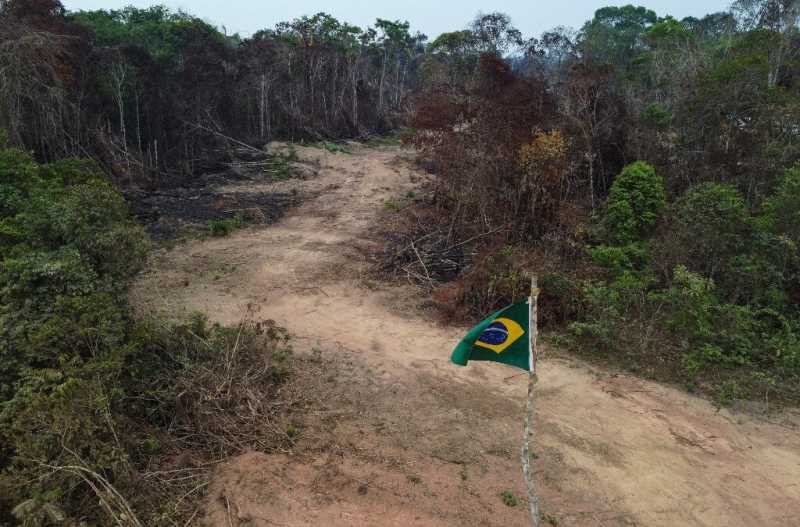
As forests around the globe vanish at alarming rates, the EU is promoting tough new rules to curb deforestation and products linked to it. But political pressure is mounting at home to water them down, with heavy bureaucracy a primary concern.
The world's forests are under threat: hundreds of millions of hectares of forest have been cleared in recent decades. The European Union wants to slow this trend - but calls to delay new rules are growing louder.
Every minute of every hour of every day, the equivalent of eighteen football pitches of tropical rainforest was destroyed last year, according to data from the University of Maryland and the World Resources Institute (WRI).
Tally it all up and the world lost 67,000 square kilometres of precious primary tropical forest in one year alone, an area twice the size of Belgium or Taiwan.
Tropical forests, which harbour the highest concentrations of biodiversity, are the most threatened of any forest biomes on the planet. They are also sponges for CO2, helping to prevent global temperatures from rising even faster than they have.
'In 2025, governments must take bold action to get on track,' a coalition of nearly 40 non-governmental organisations, think-tanks and forest research bodies have urged in a document outlining policy proposals.
To minimise its contribution to world-wide deforestation and promote more sustainable practices among companies operating in the bloc, the EU has so far brought forward the Deforestation Regulation (EUDR).
However, as part of a wider push against the EU's Green Deal - its cornerstone climate strategy to make Europe climate-neutral by 2050 - member states are calling for further delays to the application of the law.
What does the EUDR stand for?
The EUDR's goal is to stop products from entering or leaving the European market if they are made by cutting down trees. Under this law, cattle, cocoa, coffee, palm oil, rubber, soya and wood may only be sold in the EU if no forests have been cleared for them after 2020.
Firms importing the merchandise in question to the 27-nation bloc will be responsible for tracking their supply chains to prove goods did not originate from deforested zones, relying on geolocation and satellite data.
Anyone who fails to comply with the regulations faces heavy fines of at least 4 percent of annual turnover in the EU. Satellite and DNA analysis will be used to verify the origin of the products and whether the requirements are being met.
In the EU, Spain for example has a 'special responsibility' to reduce deforestation as it is the largest European importer of soybeans, according to a warning issued last year by the NGO Alianza Cero Deforestación.
Companies are however far from meeting this tracking requirement. In Germany, for example, Environmental Action Germany (DUH) found that out of 32 surveyed companies across the meat, poultry, dairy, and feed industries - as well as system catering, wholesale, and retail sectors - only four could trace their soy, and just three their palm oil, back to the original cultivation area.
Taking into account the production and use of the seven listed raw materials, the European Commission last month unveiled its first benchmark that classifies countries based on the level of deforestation risk of producing commodities that are not deforestation-free.
Russia, Belarus, North Korea and Myanmar are the only four countries considered to be at high risk of deforestation, while Brazil and Indonesia - in the past often criticised for their extensive deforestation of rainforests - are currently placed in the medium risk category.
The list raised eyebrows among EU member states and environmental groups.
Austria's minister of agriculture and forestry, Norbert Totschnig, claimed countries with high deforestation risks were now classified as medium risk countries, adding that this undermined the efforts of 'countries like Austria, which have very strict laws and operate sustainably'.
According to data from the WRI published on Statista in October, Brazil, the Democratic Republic of the Congo, Bolivia and Indonesia were among the countries with the highest primary tropical forest losses in 2023, together accounting for a loss of 2,45 million hectares that year.
Land&Forst Betriebe Österreich, an association of land managers, said: 'The current classification is incomprehensible and contradicts the clear wording of the regulation. Instead of a well-founded, data-driven assessment, political considerations seem to have played a decisive role.'
Italian Agriculture Minister Francesco Lollobrigida said 'no one denies that Belarus and Russia should be sanctioned' but called it absurd to group countries like Italy - along with others in Europe - with nations in Africa that, in his view, have significantly lower regulatory standards.
Environmental group Global Witness complained that the benchmarking system 'fell short', with 'countries like Brazil and Paraguay not categorised as ‘high risk', despite the deforestation crisis consuming climate-critical forests' there.
Why are EU member states pushing for further delays?
Originally, the regulation was to apply from the end of 2024. The European Parliament however voted in December to postpone the application by one year, setting the entry into force on December 30, 2025 for large companies and June 30, 2026 for small and medium-sized enterprises.
A group of eleven EU member states is now pushing to delay the application of the law even further, arguing that 'the requirements imposed on farmers and foresters remain high, if not impossible to implement'. They also criticise the amount of bureaucracy required of farmers.
In the document drafted by Luxembourg and Austria and signed by nine other countries - Bulgaria, Croatia, Finland, Italy, Latvia, Portugal, Romania, Slovenia and Czechia - the signatories said the requirements 'are disproportionate to the objective of the regulation, which is to prevent deforestation where it actually occurs'.
The Commission, under President Ursula von der Leyen, has set a goal to reduce bureaucracy for businesses by about 25 percent. Reporting obligations for small and medium-sized enterprises (SMEs) are expected to decrease by 35 percent.
'We do not want to flood those affected in Europe with bureaucracy; we want to prevent illegal deforestation,' Totschnig said ahead of a meeting of EU agriculture ministers in Brussels last week.
His German counterpart Alois Rainer said 'the EU's initiative to curb global deforestation is a good proposal, but the bureaucratic impact on many countries in Europe goes too far'. He added: 'It is unnecessary for us.'
The countries are calling for the creation of a category of countries with zero risk of deforestation, which could be exempted from obligations and controls.
Slovenia's Ministry of Agriculture, Forestry and Food responded to questions from the Slovenian press agency STA saying that the country supported the initiative to further delay the law due to the excessive administrative burden for farmers, small forest owners, entrepreneurs and national authorities. It has issued a call for further simplification of the regulation, especially for the low-risk countries on the Commission's classification.
Czech Agriculture Minister Marek Výborný said that 'while we do not question the global problem of deforestation, it is not a problem experienced by the Czech Republic or most EU countries'. He also said that 'the problem is somewhere else and we need to ensure that it does not affect our farmers, our foresters, our traders'.
In Romania, the Alliance for Agriculture and Cooperation (AAC), made up of four major agricultural organisations, said the law does not introduce real improvements for farmers and forest owners in the European Union, which have been frequently and intensively presented by interested parties in the agricultural and forestry sector.
COP30 on the horizon
Forest protection is high on the agenda of the COP30 United Nations climate conference that Brazil will host in November in the tropical city of Belem.
The Forest Declaration Assessment, a broad coalition of forest-based activist and research groups, has said leaders must show progress on reversing the deforestation trend before convening in the Amazonian city.
The EU takes part in negotiations at COP30 and is expected to push for stronger global action on deforestation and climate finance. But its credibility may be tested, as internal divisions grow and some member states are pushing back against parts of the EU's own Green Deal policies.
Fact check: Cocoa production a hidden driver of deforestation
The production of cocoa, one of the seven raw materials targeted by the EU Deforestation Regulation, is being affected by changing rainfall and drought patterns. A claim circulated by the Global Warming Policy Foundation suggesting that climate change has little impact on cocoa farming in Africa was found misleading by Agence France-Presse's (AFP) fact checking team.
Experts also warn that climate pressures are driving deforestation, as farmers clear more forest to meet global cocoa demand. In key producer countries like Côte d'Ivoire and Ghana, cocoa farming remains a major driver of forest loss.
The content of this article is based on reporting by AFP, Agerpres, ANSA, APA, CTK, dpa, EFE, STA, as part of the European Newsroom (enr) project. AGERPRES (editing by: Simona Klodnischi)
The content of the www.agerpres.ro website has the exclusive purpose of public informing.
All the information published on this website by AGERPRES is protected by relevant legal dispositions.
It is forbidden to copy, reproduce, recompile, decompile, distribute, publish, display, modify, create derived components or products or full services, as well as any exploitation of the site's content.
Details in the section Terms of Use. If you are interested in picking up AGERPRES news items, please contact the Marketing Department – marketing@agerpres.ro.
The use of the Comments section entails your obligation to respect the AGERPRES terms and conditions in regards to the publishing of comments on the www.agerpres.ro.
Other news in category
MApN: Three drones detected near Vylkove; no incursion into national airspace
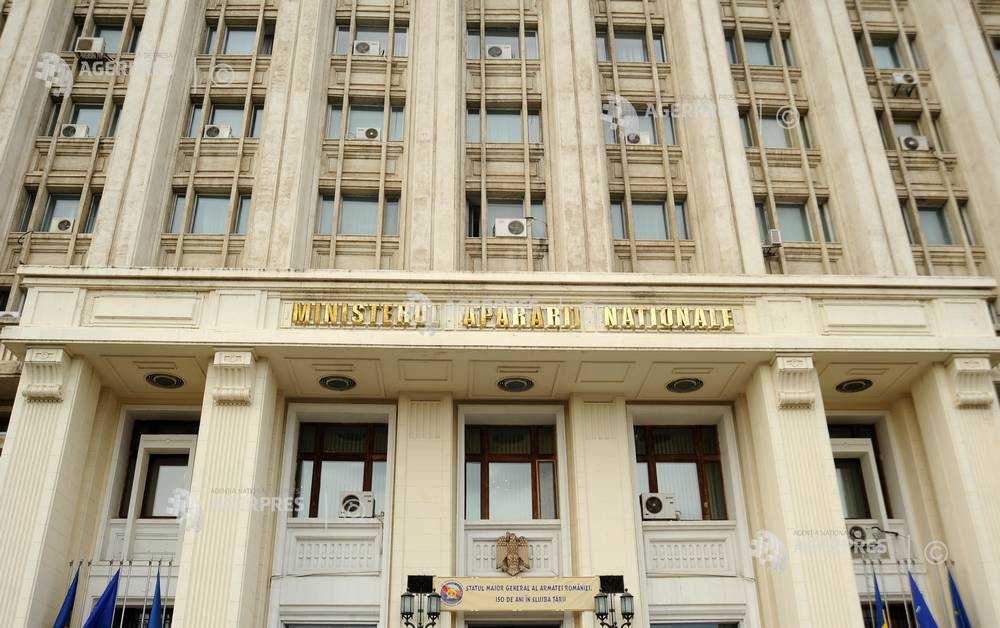
The Ministry of National Defence's (MApN) radars detected three drones flying near Vylkove, in Ukrainian territory, close to the border with Romania, on Wednesday morning. Two F-16 aircraft and a helicopter took off to monitor the situation. 'On Wednesday morning, 14 October, the radar surveillance system of the Ministry of National Defence detected ae
Bucharest General Mayor plans Destination Management Organisation for tourism promotion
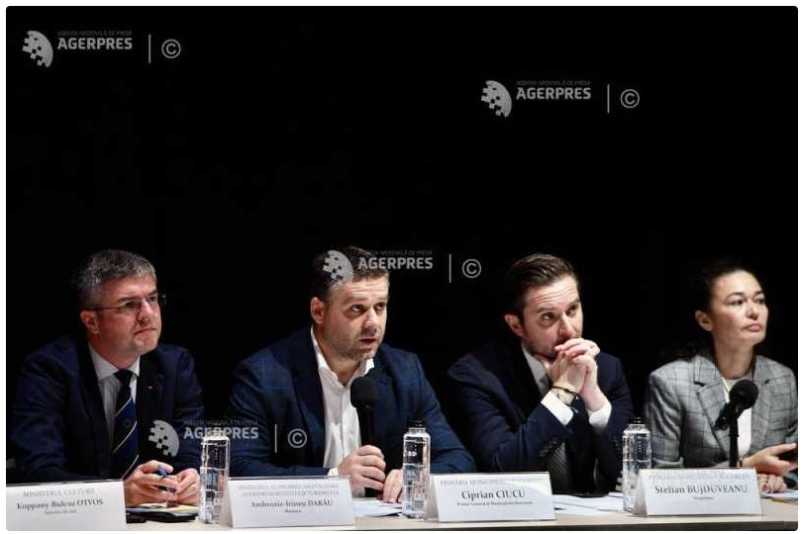
Bucharest General Mayor Ciprian Ciucu said on Tuesday that he intends to establish the Bucharest Destination Management Organisation (DMO) by the end of the year, arguing that the Romanian capital has so far lacked a coherent tourism promotion strategy. 'Until now, Bucharest has not had a coherent promotion strategy, and through this Destination Management

Support for Ukraine conditional upon compliance with minorities protection standards (Senate)
Ukraine safeguarding the right to education in the mother tongue of Romanians amid the Ukrainian Parliament having recently passed a law on the use of the languages of national minorities in the education system, was the theme of a meeting of the Romanian Senate Foreign Policy Committee. Senior official Ana Tinca, on behalf of the Ministry of Foreign Affairs,
Queen Marie of Romania commemorated with plaque in Naples as part of Romania-Italy Cultural Year
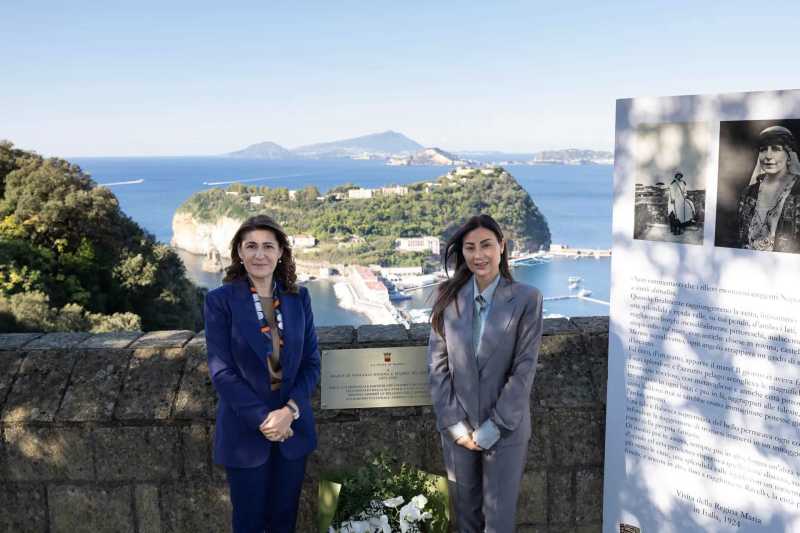
Romania's ambassador to Italy, Gabriela Dancau, together with Romania's honorary consul general in Naples, Gilda Pacifico, and Naples Deputy Mayor Laura Lieto, on Tuesday attended the unveiling of a commemorative plaque dedicated to Queen Marie of Romania in Naples' Virgiliano Park. Located in one of Naples' most iconic public spaces on the Pos

Prime Minister-designate Niculescu: On Thursday I will submit to Parliament a gov't agenda, list of ministers
Prime Minister-designate Luca Niculescu has announced that on Thursday he will submit to Parliament a government agenda and the list of the cabinet of ministers. 'We ended today two days full of consultations with the parliamentary parties for the formation of the future government. I want to thank all parties and parliamentary groups for their time, for t

Romania, India eye swift signing of veterinary health certificates required for trade
President of the National Sanitary Veterinary and Food Safety Authority (ANSVSA) Alexandru Bociu and India's ambassador to Romania, Manoj Kumar Mohapatra discussed the prospect of the signing, within short, of the veterinary health certificates required for Romania - India trade exchanges. According to a post on the veterinary watchdog's Facebook page,
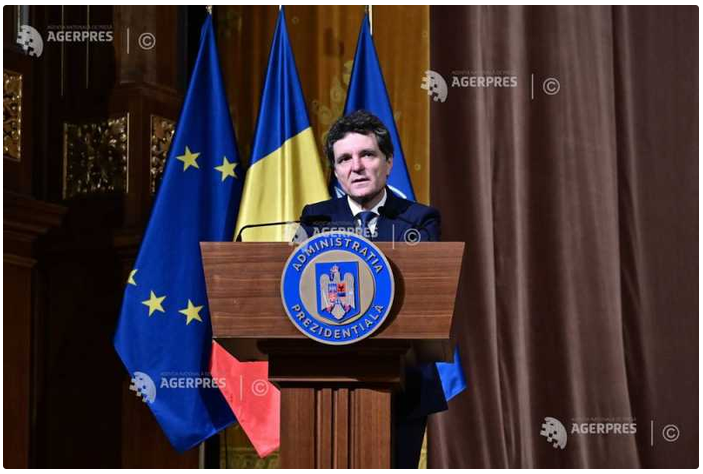
President Dan: New provisions in Ukraine establish that a mother tongue can be used in all instances
The new legal provisions in Ukraine clarify that a mother tongue can be used in all instances not only during school classes, President Nicusor Dan said on Tuesday, when he welcomed the promulgation by Volodymyr Zelenskiy of legislative amendments to the right of national minorities to mother tongue education. 'The new legislative provisions strengthen the

Ministry of Culture: Call for applications for national pre-selection for cultural competitions of Francophone Games
The Ministry of Culture announces the launch of a call for applications for the national pre-selection for the cultural competitions of the 10th edition of the Francophone Games - Yerevan, 2027. 'Do you sing, write, dance, create images, or bring stories to the stage? If you are between 18 and 35 years old, the Francophone Games could be an opportunity to

Seven gymnasts competing for Romania at 2026 Worlds in Rotterdam
Romania will be represented by seven athletes, six female and one male, at the 2026 World Artistic Gymnastics Championships, which will take place between October 17-25 in Rotterdam, the Netherlands, the Romanian Gymnastics Federation (FRG) announced on Tuesday. Performing for Romania in the women's competition will be Sabrina Maneca Voinea, Ariana Cotu, A

Ruxandra Donose, Paula Iancic, Teodor Ilincai to perform at Teatro di San Carlo in Naples
Mezzo-soprano Ruxandra Donose, soprano Paula Iancic and tenor Teodor Ilincai, accompanied by the Bucharest National Opera Orchestra conducted by Daniel Jinga, will perform on 22 October at the Teatro di San Carlo in Naples, the world's oldest opera house still in operation. ‘For the Bucharest National Opera Orchestra, the performance in Naples follow

PM-designate Niculescu: I am optimistic; all options remain on the table
Prime Minister-designate Luca Niculescu said on Tuesday, following discussions with representatives of the political parties and parliamentary groups on forming a government, that he is 'optimistic' and is not thinking about the possibility of a failure, mentioning that all options 'remain on the table,' namely a political, hybrid or technocratic government.
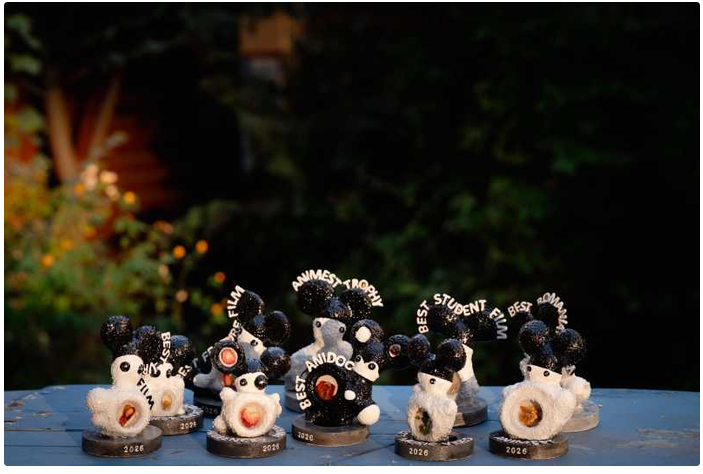
Slovenian-Italian film Cosmonauts wins top prize at Romania's Oscar-qualifying Animest festival
The Slovenian-Italian short film 'Cosmonauts', directed by Leo Cernic, has won the Grand Trophy at the 21st Animest International Animation Film Festival in Bucharest, organisers announced in a press release sent to AGERPRES on Tuesday. The short film jury praised the film's strength and humour, describing it as 'an exploration of the human nee
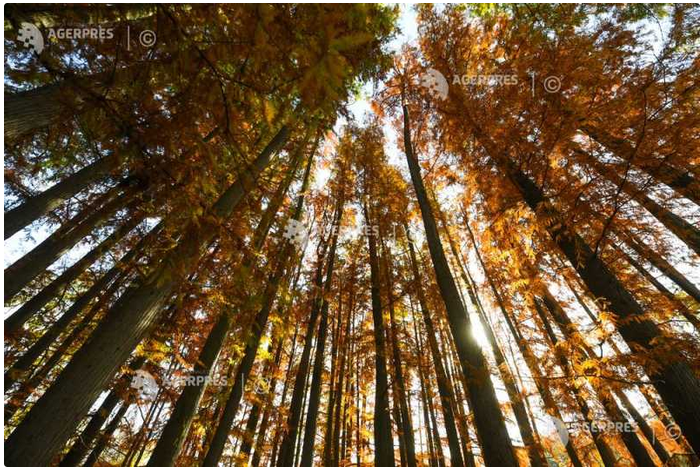
Greenpeace Romania stages protest outside IKEA store over alleged links to logging in ancient forests
Greenpeace Romania activists staged a protest outside the IKEA Pallady store in Bucharest, highlighting the link between the furniture on its shelves and the clear-cutting of an ancient forest in the Poiana Rusca Mountains (Compartment 37, Natura 2000 site ROSCI0219), the organisation said in a press release sent to AGERPRES on Tuesday. According to the press

Bucharest National Theatre introduces English surtitles for selection of plays
The ‘I. L. Caragiale' National Theatre in Bucharest is introducing English surtitles for a selection of productions from its repertoire to be staged in October and November. According to a press release sent to AGERPRES on Tuesday, the initiative aims to make the Bucharest National Theatre's productions more accessible to international audiences.

Romania builds over 636,000 homes in decade, with construction rate close to Germany's
More than 636,000 homes were completed in Romania between 2016 and 2025, equivalent to nearly 33 new homes per 1,000 inhabitants, a construction rate comparable to Germany's and higher than those recorded in the Czech Republic, the United Kingdom, Spain and Portugal, according to an analysis by real estate consultancy Cushman & Wakefield Echinox. Measu