

INTERVIEW/David Saranga: Romania has changed 180 degrees from the country I used to know

Ambassador of Israel David Saranga is concluding his mission in Romania and says that it is not an easy moment because he feels connected to this country, to the people, to Romanian history and traditions.
For him, the Romania he found when taking office as ambassador is a "different country" compared to the one he was in 25 years ago.
"The Romanian society is totally different from the society I knew 20 years ago. The young generation is one hundred percent an European society. For me, it's like I came to a new country, knowing the history and tradition and the language, but as if it is a new country. Romania, in my eyes, has changed 180 degrees from the Romania I knew back then," David Saranga told an interview granted to the National News Agency AGERPRES on Monday.
In the interview, the ambassador talks about his relationship with Romania, but also about the situation in the Middle East and about digital diplomacy, a field he will deal with in Israel.
AGERPRES: Your Excellency, at the end of your office, you left in Romania a volume called "Returning to Romania". My question for you: how is leaving Romania, because today you are leaving Romania.
David Saranga: Leaving is never easy. It is not easy because it is a period that is ending, a very beautiful period that is ending, a period of four years with many activities and for this reason it is not easy. I got attached to your country, I got attached to the people, I got attached to Romania's history and tradition, and for this reason it is not easy. On the other hand, leaving is a new beginning and, being an optimistic person, I also see this full part.
AGERPRES: You were in Romania once before, 20 something years ago...
David Saranga: ... and five. I arrived exactly 25 years ago.
AGERPRES: I read in an interview of yours that your mandate in Romania was your first office in diplomacy. You then went to Spain, and there you were perceived as if you had been punished for coming to Romania. How will you be perceived now, when you return from your mandate in Romania?
David Saranga: I'll give you an example. When there was an opening for this position as ambassador in Romania, when I came here, there were about 20 people who wanted to come here as ambassador, and when I left or when people knew that I was leaving, I received dozens of phone calls - from ambassadors from all over the world or from diplomats - who asked me about this post. Why? Because people want to come to Romania. I thought that it would be easy for me to receive this position of ambassador in Romania, having been in Romania in the past, knowing the language, being a senior diplomat and there were many who wanted this position. So, today, the world knows that Romania is a good country for diplomatic activity, I mean for an Israeli diplomat, and people know that it is not a place where someone is punished, on the contrary, it is a place with which you reward someone.
AGERPRES: Returning to the Romania of now compared to the communist Romania of your first mandate, what were the major changes you saw?
David Saranga: It is another country. It's another country. First of all, Romanian society is totally different from the society I knew 20 years ago. The young generation is a one hundred percent European society. For me it's like I came to a new country, knowing the history and the tradition and the language, but as if it is a new country. Romania, in my eyes, has changed 180 degrees from the Romania I knew back then.
AGERPRES: On the other hand, you, as ambassador, took a position on a series of hate speeches, on anti-Semitic speeches that took place even in the Romanian Parliament, in the Romanian public discourse. Could you tell us more about this and the need to talk about these things?
David Saranga: If we talk about when I was here and there was an anti-Semitic party back then and there was Romania Mare [the Greater Romania Party - ed.n.] and there was Vadim Tudor and there was the Romania Mare publication back then, where every week I could read this hateful message from Vadim Tudor and Greater Romania. Extremists are everywhere. We have extremists too. The far right world is everywhere in Europe and the United States and Israel and other countries. What is important is how society reacts against this hateful message, how society reacts against this extreme right-wing movement, and I can say: The Romanian government, the Romanian society, public figures in Romania reacted properly, exactly as they should have, against this hate speech, against this extremist phenomenon. And this is how one judges or knows about a society - how the officials and how the society reacts.
AGERPRES: And how do ordinary people react now compared to the 90s?
David Saranga: I didn't conduct a survey, others did. I didn't conduct a survey and that's why I cannot tell you, but I see, for example, messages on social networks. Yes, it's true, what I see on our page or my page is not necessarily what is there. (...) From what I have seen, like any society you have voices that are against, you have voices - a minority - that support this message. This happens everywhere. For this reason I said that it is important what Romania does or how it reacts officially.
AGERPRES: You also supported the project of the Holocaust Remembrance Museum, a project that has been long in the making and is still not completed. Were you promised or do you have cues that this Holocaust Memorial Museum will be built in the near future in Bucharest?
David Saranga: It is a project of the Romanian Government, which is well regarded by Israel and the Jewish community worldwide. I would have liked to see the project carried out faster and in every meeting this question is there and your officials have always promised me that things will happen soon.

AGERPRES: When it is inaugurated, will you come to see it?
David Saranga: I will come even sooner.
AGERPRES: When?
David Saranga: Tomorrow (laughs). If I leave today, I can come back tomorrow. I can tell you for sure that I will come because it is true that I have traveled enormously in your country, it is true that I have seen many places, but there are many others that I have not seen yet and that I want to see. And the second thing is that I always like to go back to the places I know and love and where I know people. So without a doubt I will be back.
AGERPRES: Since you have seen certain regions of Romania at your leisure, if you were to be somebody's guide in Romania, where would that be and where would you take that person?
David Saranga: It depends on how much time we have. For instance, the day before yesterday I was in Sighisoara and installed a plaque with the distance to Jerusalem in the city's Clock Tower. And if a friend comes for three days, I cannot take him to Sighisoara. We would do the Bucharest - Sinaia - Brasov and back to Bucharest trip, so that he can see a little of the Carpathian Mountains scenery and the city setting. If they have five days to spend, then we can travel further. But if I were to recommend something, then it's the Delta area, the Danube Delta, which is unique and different from anything we know and are acquainted with. There are not many places in the world like the Danube Delta. The second place would be Bucovina, with beautiful landscapes and simple and welcoming people, northern Maramures, the Brasov - Bran - Rucar area which is superb, the Horezu area, with the Horezu Monastery. That's where my travel focus was, I visited those places several times.
AGERPRES: Speaking of foreign policy, recently President Emmanuel Macron and several political leaders highlighted the need to revive the Israeli-Palestinian peace process. President Macron said that the situation in the region is more than concerning. How does Israel see this situation and the solution thereto?
David Saranga: The situation in our area is concerning. Period. First of all because of Iran. What Iran wants to do in the region - its attempt at having a nuclear capability, its moving away from the Joint Comprehensive Plan of Action required by the International Atomic Energy Agency - that's worrying. The fact that Iran shut off the surveillance cameras at its nuclear facilities is very frustrating, but not just frustrating, but very concerning as well. This is one element. The second element is represented by the extremist components in the region, around Israel, starting with Hamas, in the Gaza Strip. Last year alone, rockets were fired from Gaza towards Tel Aviv, Jerusalem, towards the centers of Israeli cities. Then there is also Hezbollah, with a firepower of 150,000 rockets that can reach Tel Aviv. Yes, it's a very complicated and dangerous region. That said, in the last two years since the signing of the Abraham agreements, we see that the moderate Arab countries, along with Israel, which understand the threat coming from Iran, from extremism, are on the same wavelength: the United Arab Emirates, Bahrain, Israel, Egypt, Morocco, Jordan - we are on the same page and cooperate, because we understand that there is a great potential in terms of economic cooperation. On the one hand, we want to cooperate because of the economic benefits, and on the other hand, we all understand the threat posed by Iran in the region.
AGERPRES: But as regards the relationship between Palestine and Israel, world leaders also spoke about the issue of Israeli West Bank settlements. This is one topic, and the other one is related to the organization of elections in Palestine, which have been postponed several times.
David Saranga: I will explain it simply: Israel is willing to sit down at the negotiating table, without preconditions. The settlements can also be on the negotiation table. But let's say that tomorrow we sit down to negotiate with President Abbas. Will he deliver [what is being negotiated]? He can say "I am not responsible for what is happening in Gaza". Because he is truly not responsible for what is happening there. Who should we sit down and talk to? Okay, let's talk. Abu Mazen [Mahmoud Abbas], let's talk, but you do not represent the entire Palestinian nation. He cannot enter the Gaza Strip, he has no influence there. That's in the first place. Secondly, I wonder if President Abbas is willing to make concessions and negotiate. So far he has refused. I must also point out that, first of all, peace is good for Israel because we have more to lose. Let me explain this: when you are a prosperous country, with a strong economy, when you have a strong IT sector, you stand to lose a lot if there is terror.

AGERPRES: Poor countries also have a lot to lose...
David Saranga: I'm not saying this isn't so. But I represent Israel. I know what I stand to lose and I know why I want peace. And I know that we want peace and I know that every time we had a partner we could negotiate with, in the end we have made all the necessary concessions to secure peace. This means that we need a dialogue partner. Unfortunately, we don't have this partner now, and we are not the only ones saying that we do not have partner. The U.S., Europe are in the same situation, nobody says now "OK, make those concessions". We do compromise, but after negotiation or discussion. But if someone doesn't want to sit down with you, it's rather difficult.

AGERPRES: Can you talk about your future mandate, upon returning to Israel?
David Saranga: I will be heading the Digital Diplomacy Division. In recent years Israel and the Israeli Foreign Affairs Ministry have been running one of the best digital diplomacy systems. On the other hand, I have my own experience, as one of the first Israeli diplomats to use social media for the purpose of public diplomacy, in 2009, 2010, during my term in New York. I am very pleased with this new position, and the goal is not just to use social media in order to convey a message. This is what all countries do. The main challenge is to think about where we want to be in five years. Technology is changing at a fast pace, and we want to be at the forefront of public diplomacy and technology. And the combination of the two is crucial. There are new worlds we want to enter, like for example everything related to the metaverse, which is the future and just as we were the first on social media - Twitter, Facebook, Instagram - I hope we will be the trailblazers in these new technologies too.
AGERPRES: Speaking of social media and the messages sent on social media, there is the issue of fake content. What is the lesson that Israel can pass on regarding the fight against fake messages?
David Saranga: Fighting fake news is very difficult, in general. It's hard. We, in Israel, were partially successful when it came to closing down certain sites and accounts we knew were disseminating fake news and hate speech. Did we pull them all down? No. Technological giants such as Facebook, Twitter, Google did not pay enough attention to the phenomenon. They are more careful now, now there are more regulations in place in the EU and so on. One of my missions is to engage in dialogue with these technology companies and discuss these things.
AGERPRES: About a global policy?
David Saranga: As far as I am concerned, a policy in Israel. I will discuss with the Facebook, Twitter, Google representatives and I will try to see how we can reach an agreement, because we are not only talking about fakes, there is hate speech, but there are also things that we can do together. Let's not forget that if we draw a line, many people enjoy hating. We are talking about a love-hate relationship. Imagine our life without Facebook, without Twitter, without Instagram. Can we imagine that? I can't. I remember that a year ago Facebook was down for several hours and we were insisting to access the platform. We still had Instagram and Twitter, but it wasn't the same. We are all like that. I am the last person who would say that we don't need Facebook. Of course we need it, but let's find together a formula whereby this monster will serve humanity and not harm it.
AGERPRES: Back to your relationship with Romania, can you tell me your favorite word in Romanian?
David Saranga: I haven't thought about that ... "dorule" (a word expressing a nostalgic yearning - Ed. note).
AGERPRES: And a Hebrew word to define Romania?
David Saranga: "Generous". Romanians are very generous. Whatever you do - you do it with generosity. When you love someone, your love is wholehearted, when you put someone at the table, the table is full, the gifts are magnanimous. You are very generous. To me, generosity represents Romania. And this is how I would describe the Romanian people.
AGERPRES: At the end of your term, do you regret not having done something or not having said something?
David Saranga: As someone who has served as a spokesperson, I know that no one regrets something they didn't say. First of all, I don't regret anything I have done. I always wanted more, to visit more places, meet more people and have us carry out more projects. But I am very pleased with what I achieved. In these four years we had the pandemic which didn't allow us to hold large-scale events, cultural events and others. Then the Ukraine war struck, changing the course of our activity, we had a war in Gaza, which also changed the course of our activity, because when there is a war in Israel one deals exclusively with that. That said, I am very satisfied with the cultural activities we have organized in the last six to seven months. It was a form of compensation for the COVID period and the fact that we had so many big events with a large attendance, and us being able to share Israeli culture and receive the love of the public gives me a lot of satisfaction.
AGERPRES: The last question is when will you return to Romania?
David Saranga: I even have a date (laughs). I'll tell you after you turn off the recorder. It will be somewhere in October - November.AGERPRES(RO - author: author: Oana Ghita, editor: Andreea Rotaru; EN - authors: Simona Iacob, Simona Klodnischi, editor: Maria Voican)
The content of the www.agerpres.ro website has the exclusive purpose of public informing.
All the information published on this website by AGERPRES is protected by relevant legal dispositions.
It is forbidden to copy, reproduce, recompile, decompile, distribute, publish, display, modify, create derived components or products or full services, as well as any exploitation of the site's content.
Details in the section Terms of Use. If you are interested in picking up AGERPRES news items, please contact the Marketing Department – marketing@agerpres.ro.
The use of the Comments section entails your obligation to respect the AGERPRES terms and conditions in regards to the publishing of comments on the www.agerpres.ro.
Other news in category

Romania makes debut at China International Import Expo in Shanghai with two pavilions, 15 companies
Romania is taking part for the first time in the China International Import Expo (CIIE), held in Shanghai from November 5 to 10, 2026. Romania is participating in the event's ninth edition with two exhibition pavilions showcasing 15 companies, according to a press release from the Consulate General of Romania in Shanghai. Held annually, CIIE is the world&#
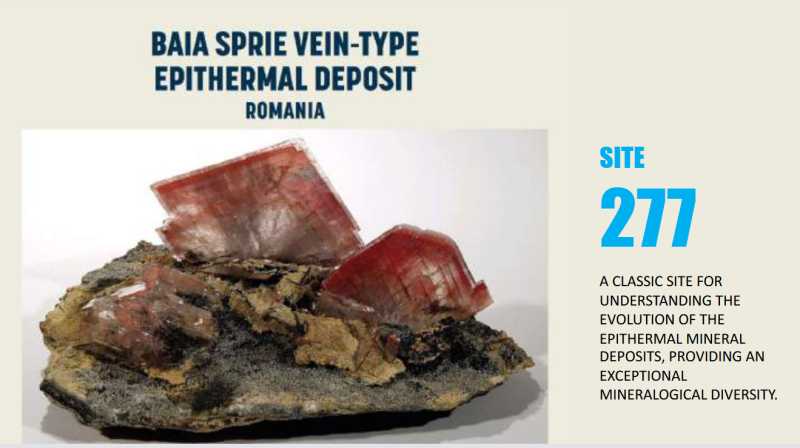
Baia Sprie hydrothermal deposit becomes Romania's first site on IUGS geological heritage list
The hydrothermal ore deposit in the former mining town of Baia Sprie has become the first site in Romania to be included on the geological heritage list recognized by the International Union of Geological Sciences (IUGS), the team behind the Gutai-Maramures UNESCO Geopark project announced on Friday. The international recognition was announced at an event held

Black Friday2026/Transaction volumes across all payment methods reached 763 million lei by Friday evening
The transaction volumes processed across all payment methods during 'Black Friday' 2026 reached 763 million lei, according to data presented on Friday evening by Elena Gheorghe, Country Manager for PayU Romania and Hungary. 'As of this moment (17:45, editor's note), we have reached 763 million lei in processed transaction volume across all paym
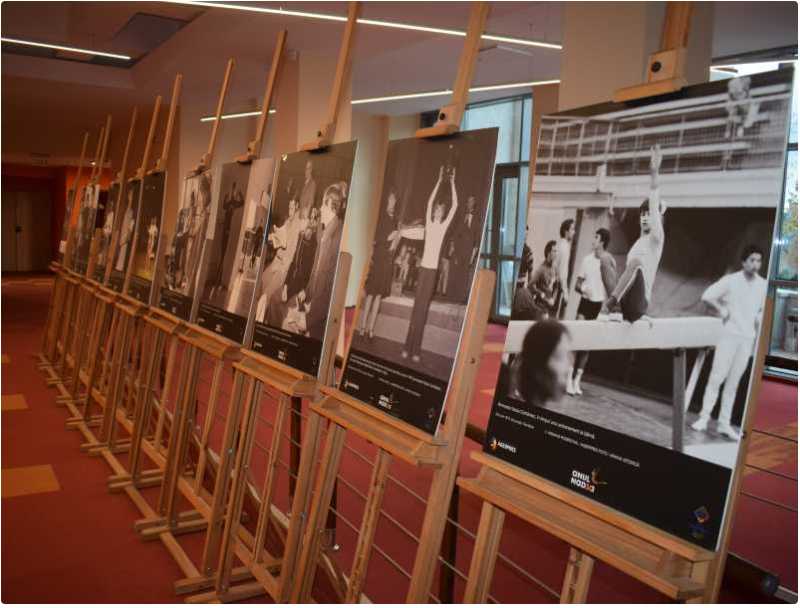
AGERPRES exhibition celebrating Nadia Comaneci's perfect 10 opens in Vaslui
The AGERPRES exhibition 'Nadia. Perfection Has a Story' opened on Friday at the Vaslui County Cultural Centre, marking the start of the Excellence in Education Gala. The mayor of Vaslui said he had been particularly keen to bring the exhibition to local audiences to celebrate the achievement of multiple gymnastics champion Nadia Comaneci 50 years ago,

Romanian president warns fake accounts, algorithms threaten citizens' voices in democracies
The danger to democracy is that citizens' legitimate voices may no longer be heard, drowned out by hundreds, thousands or tens of thousands of paid fake accounts or by algorithms, President Nicusor Dan said on Friday at a working meeting on 'Information Society and Constitutional Democracy', organised as part of the three-year programme of the Presidency of the A
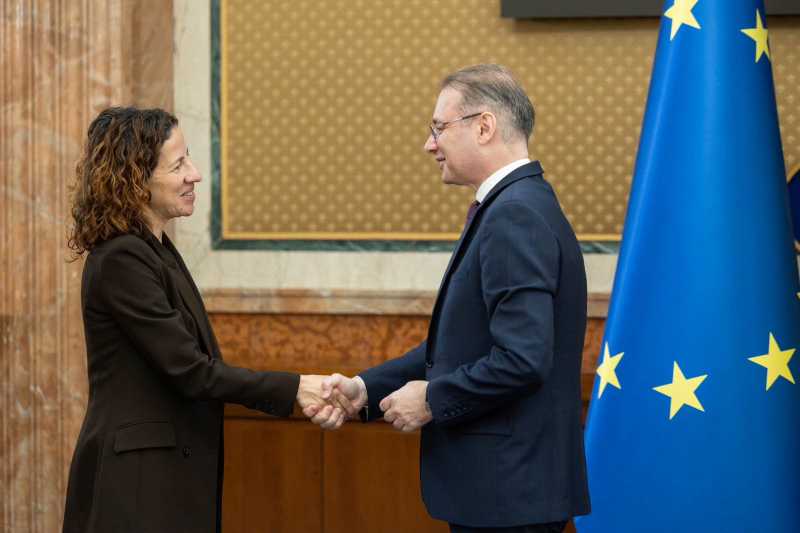
PM Niculescu, European Commission vice-president Minzatu discuss youth employment, skills development and EU funding
Prime Minister Luca Niculescu met on Friday at Victoria Palace with European Commission Executive Vice-President for Social Rights and Skills, Quality Jobs and Preparedness Roxana Minzatu to discuss the government's priorities in education, youth, skills development, employment and social policies, as well as opportunities to access EU funding in these areas.

Niculescu:Information Society and Constitutional Democracy,a theme that represents challenges of contemporary world
Luca Niculescu stated on Friday that engaging in a debate among constitutional jurisdictions on the topic of 'The Information Society and Constitutional Democracy' is a highly valuable endeavor, as it highlights the implications of a society's fundamental values, values upon which the daily lives of citizens also depend. The Head of the Executive p
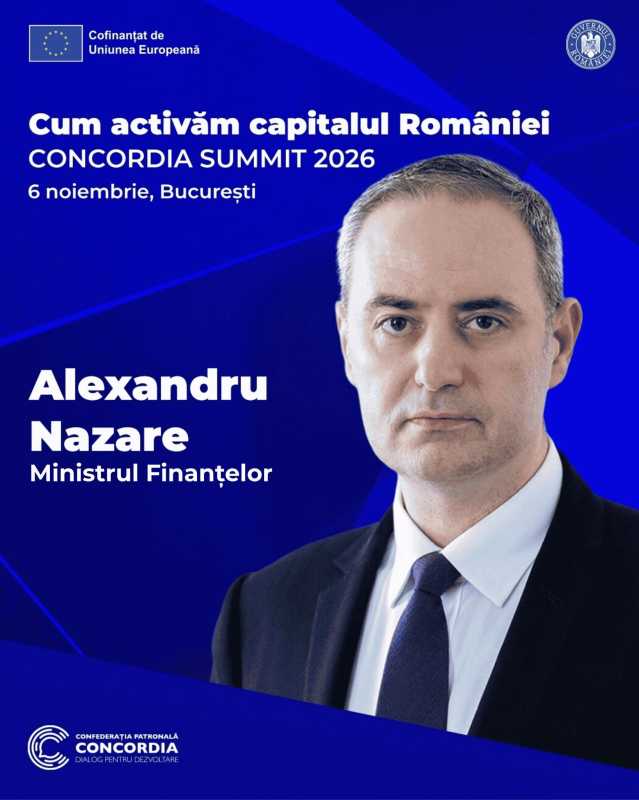
FinMin Nazare says Romania has two offers for the construction of an AI Gigafactory
Romania has received two bids for the construction of an AI Gigafactory, and the selection process is in its final stage, with authorities hoping to be able to announce the outcome by the end of this year, Finance Minister Alexandru Nazare stated on Friday at the Concordia Summit 2026. 'Following nearly a year of effort, Romania currently has two bids on t

Black Sea security, EU enlargement on agenda of President Dan's meeting with EC President von der Leyen
European defence and security, particularly security in the Black Sea region, European competitiveness, including current energy issues, EU enlargement, especially Romania's support for the Republic of Moldova, and negotiations on the EU's new multiannual financial framework are among the topics President Nicusor Dan will discuss with European Commission President Ur

BusinessEurope President: The Single Market is extremely important; it is the absolute priority
The European Single Market is extremely important, and we must promote this solution, which stands as an absolute priority, because it constitutes a major source of economic growth, stated Maciej Witucki, President of BusinessEurope (an organization representing the business community at the European level), on Friday, at the second edition of the Concordia Summit 2026.
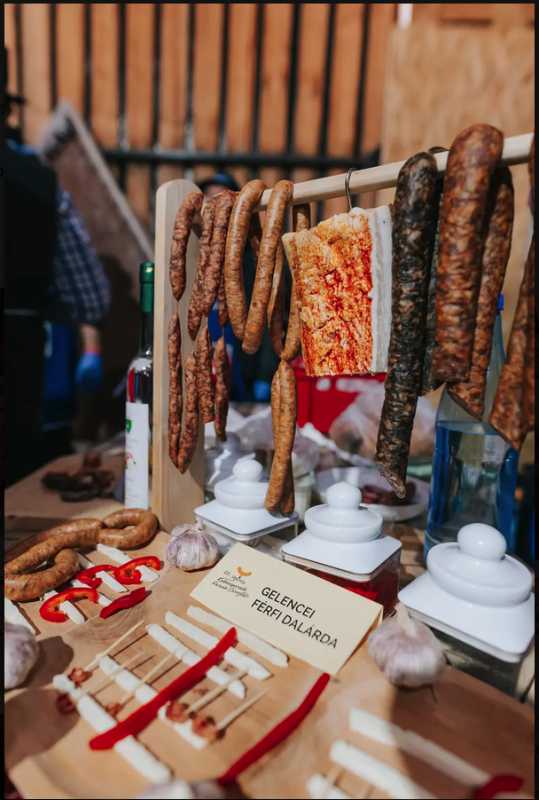
Mikes Castle in Zabala to host Sausage Festival 21st edition
A total of 23 teams from Romania and Hungary have registered for the 21st edition of the Sausage Festival, which will take place on Saturday, 7 November, at Mikes Castle in Zabala. The competition will be held in the castle's barn, as in previous years, and the event will include, among other activities, a sausage-making contest, a local produce fair and c
Chiritoiu:Restructuring plans for Oltenia and TAROM must be renegotiated with European Commission,ideally by EOY
The restructuring plans for Complexul Energetic Oltenia and the company TAROM must be renegotiated with the European Commission as soon as possible, ideally by the end of the year, and we are beginning the necessary steps this month, Bogdan Chiritoiu, President of the Competition Council, stated on Thursday at a specialized event. According to him, both restru

PM Niculescu: Romania has investment capital but needs to rebuild trust
Romania has capital, resources, savings that can be channelled into investment, and access to European funds. However, economic development also requires another kind of capital: trust between the state and the business community, and between institutions and citizens, Prime Minister Luca Niculescu said. The head of government attended the CONCORDIA Summit 202
Marincea (SRI): Bomb threats at Otopeni Airport not substantiated; authors' identity under investigation
The bomb threats at Otopeni Airport have not been substantiated and the authors' identity is currently under investigation, Romanian Intelligence Service (SRI) spokesperson Ovidiu Marincea said on Friday. 'The SRI, through its Anti-Terrorist Brigade, has carried out the relevant checks and, so far, the threats have not been substantiated and no explosi
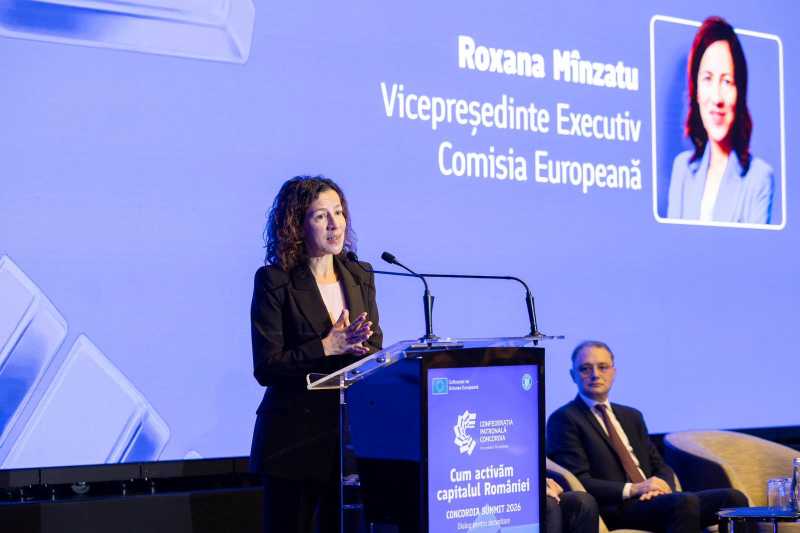
Roxana Minzatu: Human capital is key to economic success
All the work that the European Commission is doing is to outline a solid, competitive perspective from which people can benefit, in a rather turbulent context, Executive Vice-President of the European Commission for Social Rights and Skills, Quality Jobs and Preparedness Roxana Minzatu said on Friday at the second edition of the Concordia Summit 2026. 'The