

An average European consumes 102 euros a year in organic food, in Romania consumption is two euros
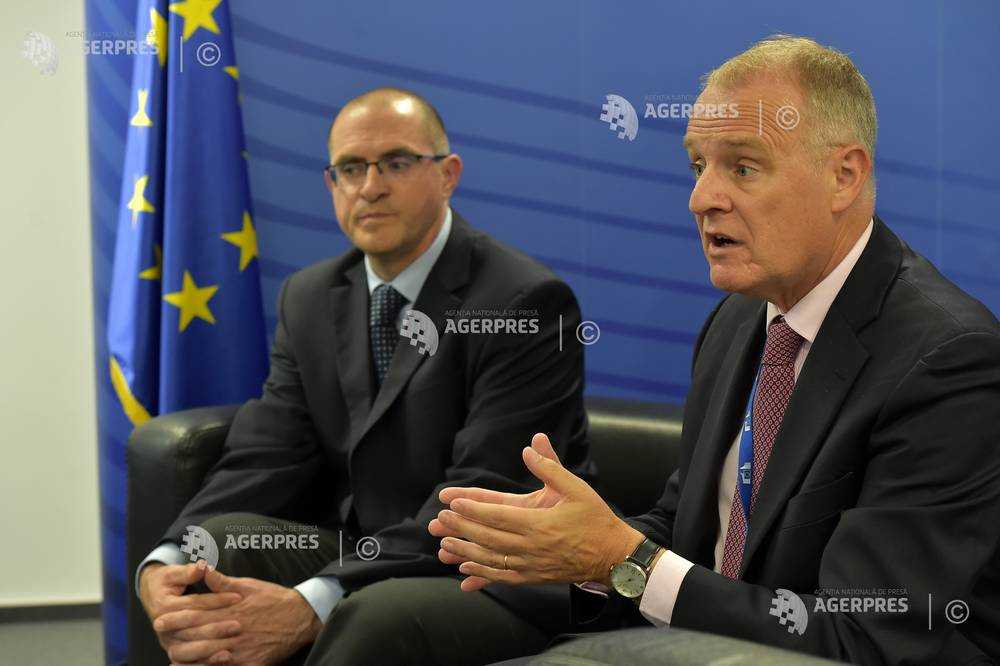
The market for organic products in Romania could grow if the Romanian authorities start, little by little, to provide organic food in hospitals, schools and universities, officials of the European Commission's Directorate General Agriculture and Rural Development Diego Canga Fano and Henri Delanghe told AGERPRES in an interview.
The two European officials responsible for organic farming were visiting Romania to help the country develop a national organic farming action plan, with Romania being the first EU member state they visit because of the importance of the sector.
They said that Romania has a huge potential for growth in organic farming as an average Romanian consumes only two euros/year in organic food, while elsewhere in the European Union average consumption is over 50 times higher, at 102 euros per year.
According to the European officials, organic farming is very important for the European Commission and therefore it is desired that all the EU member states, including Romania, develop it and adopt a comprehensive approach on supply and demand and also sustainability, and the CAP national strategic plan and the recovery fund can also contribute to the development of organic farming.
They also said that the government can play a very important role in consumer information and education, adding that in Romania there should be more stimulus for green public procurement, the public procurement of organic products.
AGERPRES: What was the purpose of your visit to Romania and what are the conclusions?
Diego Canga Fano: In the European Union, the target is for 25% of the total EU agricultural area to be organically cultivated in 2030. In Romania, now only 3.5% of the agricultural area is organically cultivated. Being such a large country, we have all interest in the growth of the Romanian organic sector. We had a contact with the Romanian authorities a couple of weeks ago and we decided to come here to Romania to help the Romanian authorities drafting the national organic action plan. We have had during those days four rounds of meetings.
We met yesterday [Tuesday] with the government, with several ministers, the minister of health, of course ministers of agriculture, health, education, environment and with the prime minister (...) In the afternoon, we met the farmers' associations, the private sector. This morning we met the retailers, all the most important retailers in Romania and we have just finished now with meeting the control bodies, bodies that certify that a product is organic. We are satisfied with the results of the visit. We have exchanged freely a lot of ideas, and the purpose is to help the Romanian authorities.
To give you figures about the magnitude of what we want to do: the average consumption of organic products in the European Union per capita is 102 euros, in Romania it is two euros. So the potential of growth is huge in Romania. And that's why we're here. We gave them lots of practical examples. There is something which we want to pay particular attention to, which is green public procurement. We would like that Romanian authorities start making, little by little, in the public canteens of hospitals, schools, universities, the army, the residences for the elderly a little bit of organic food. That's what other countries are doing, and the more you do this green public procurement, again in universities, hospitals, the army, you name it, the more the local market will grow in Romania. The supply of organic food to these public canteens is one of the elements that we highlighted very much during the visit.
Henri Delanghe: The European Commission believes organic farming is really very important. Organic farming involves a reduced use and risk of fertilisers and pesticides, veterinary medicine and therefore it has very positive environmental effects, climate effects, effects on biodiversity, on animal welfare, on the soil, quality of the soil, on water, and it also has important social effects, so higher incomes for farmers, rural development. So for all those reasons, we prioritised organic farming, and that is also why there is this target of 25% of all EU agriculture get under organic farming by 2030, and this target has been included in the "Farm to Fork" strategy and in the biodiversity strategy.
What we came here to do is really to assist the Romanian government in developing a national action plan and to encourage Romania to take a very comprehensive approach when it comes to the organic sector. So, to focus on demand. How can we stimulate the demand for organic products via education, information, cultural promotion? How can we stimulate the supply? And there is where the CAP national strategic plan will play an important role. Because the National Strategic Plan for the Common Agricultural Policy includes all of the support for organic farming as well. And we also need to look at the sustainability of the sector. So these are the two additions, to say organic farming is very important for the Commission, that's why we want all the member states, including Romania, to develop it, and to take this very comprehensive approach, demand side, supply side and sustainability. And of course the strategic plan, the recovery fund they can all contribute to developing the organic sector.
AGERPRES: Do you have figures on the production of food from organic agriculture and that obtained by conventional methods in the EU or in Romania?
Diego Canga Fano: The largest market for organic food is Germany, with 15 billion euros. In Romania, the market is 41 million euros, very modest. In terms of per capita consumption, as I said before, the average European consumes 102 euros per year in organic food. In Romania it is only two euros. It's a modest consumption of organic food. It means that all the rest is covered by food produced by conventional methods. Here in Romania, the presence of conventional [farming] is very strong and the presence of organic [farming] is very modest. And that's why we're here, to try to make the organic farming stronger.
AGERPRES: How can we reduce the price of organic products, given that organic products are more expensive than conventional ones?
Diego Canga Fano: That's right. Organic products are more expensive than conventional ones. That's why we insisted much at the government level and also at the level of local and regional authorities, to organise green public procurement, again in hospitals, schools, universities. Green public procurement is when, for example, in a canteen part of the food is organic food. We are not saying the totality of the food, just part of the food, being organic food. When you do so, you start producing more organic food, then the differential price gap will be reduced. But we need the government and the regional authorities to organise the public tendering system to buy some organic food. Again, we are not asking for organic food every day, we are asking that maybe once a month, once every two months you have organic, and this could help reduce the price gap between organic and conventional foods.
Henri Delanghe: Price is a very complex issue. Price has a lot to do with the availability of organic products on the market and that's where green public procurement plays a very important role because it helps develop production. Then it has to do with positioning the product on the market: do you position it as a luxury product, do you position it as a mainstream product? It is clear that for the Commission the long-term objective is that organic products become mainstream products and not luxury products.
AGERPRES: Does Romania need to allocate more land for organic farming?
Diego Canga Fano: That would be great, because of the size of the country. At present in Romania only 3.5% of the land is organic, and we have a target in the European Union of 25%, globally. So for us at the European Commission, the more Romania grows, the better for the European Union. And the potential of growth is very important. For your information, this is the first country that we visit. We came on purpose to Romania because of the importance of the country, to grow the surface of organic farming.
AGERPRES: How is Romania in the EU in terms of pesticide consumption and what can the European Commission do to support farmers to make a transition to organic farming?
Henri Delanghe: This is the essence of organic farming: you reduce fertilisers, you reduce pesticides. That is why the strategic plan is so important. Because there the government allocates funds for the conversion from conventional agriculture to organic agriculture. But not only subsidies, not only financial support, but also advisory support, support for investment, support for co-operation. So there is this window of opportunity of the CAP strategic plan, but then there are all other things they can do, and that is why we are here. As a complement to the strategic plan for the common agricultural policy you can have a national organic action plan. They can support farmers by increasing demand for organic products, because the best motivation for a farmer to convert to organic farming is not whether he receives a subsidy or not, but whether he sees that there is a growing demand, private demand, public demand, for organic products and that's where the government can play a very important role in terms of informing consumers, educating consumers, in terms of agricultural promotion, in terms of education even in primary and secondary schools on healthy diets, in terms of bringing stakeholders together optimising supply chains. So there are so many things to do.
Diego Canga Fano: Plus green public procurement; that's my point before. If the government decides that in the public canteens they have for example once a month or once a week organic food, it's good to help the sector of organic farming. And this green public procurement is happening everywhere in Europe, and I think that in Romania there should be a bit stimulus to have this green public procurement.
AGERPRES: What are the strengths of Romania compared with other European countries in terms of organic farming?
Diego Canga Fano: First of all, I would say the size of the country. You have a nice climate for agriculture and you have a long tradition of a farming country. So the potential is there. It's just that the figures for organic farming are modest.
Henri Delanghe: I have also heard yesterday and today that in Romania there are a lot of small farmers that, de facto, are very close to organic production because they do not use fertilisers and pesticides. Again, it shows the potential. Because if they get organically certified and contribute to the supply chain, that would be very good in terms of achieving this target. That means that this official transition to organic farming should not be so complicated for many farmers if de facto they are already not using so many fertilisers and pesticides.
AGERPRES: After this visit to Romania, what is the next step in the relation with Romania?
Diego Canga Fano: Romania should now approve a national organic strategic plan. It should be noted that there are two things: there is a Common Agricultural Policy, where Romania is discussing now with the European Commission the national strategic plan, and then the reason we are here today it's the national organic action plan, which is not directly linked to the Common Agricultural Policy. It is something else, and this national organic action plan contains measures to stimulate the growth of the organic sector in Romania. We thought that our presence here was useful, giving them ideas and examples to make the Romanian organic sector grow.
AGERPRES: Do you have any figures regarding the financial support that Romania could count on from the European Commission?
Henri Delanghe: There are different sources of financing. The main source of financing is the National Strategic Plan for the Common Agricultural Policy, because there is where the support lies for the conversion to organic farming, maintenance of organic farming, investment support, co-operation support, etc. There is also very important support from what we call agricultural promotion budget, which are funds at EU level which are distributed to the member states to make promotion for organic products domestically, within the EU, but also in third countries. There is a quarter of the budget, and this year is 50 million euros, reserved for the promotion of organic products. And then we have what is called the Research and Innovation Framework Programme Horizon Europe, and there you have funds for research on food and forestry and agriculture. And then one third of the budget is again reserved for research that is relevant for or specific to organic farming. So there are all these different sources, the Common Agricultural Policy, the agricultural promotion budget, the research and innovation framework programme. Another example is the school scheme. There is a scheme at EU level that distributes funds to the member states to distribute milk and fruit and vegetables to schoolchildren. And there, many member states are priroritising organic and organically farmed products. So that's another potential source of financing.
AGERPRES: In the current context created by the war in Ukraine and inflation, do you think that the European Union's plans with the "Farm to Fork" strategy need a postponement?
Diego Canga Fano: I don't think so. The line of the Commission is to stick to the "Farm to Fork" strategy. The commission thinks that precisely this war in Ukraine is strengthening the need for achieving the targets of the "Farm to Fork" strategy. (...) Organic farming is a good example. There are restrictions on fertilisers. People doing organic farming do not have this problem, because simply they do not use chemical fertilisers. So, it's a further reason to say that when you are in the organic farming sector, when you are certified, there are some problems that you do have, while in the conventional agriculture sector you may have some problems. The line of the commission is to stick to the "Farm to Fork" strategy and the biodiversity strategy.
Henri Delanghe: I would like to add it's not because there is a war in Ukraine that all the environmental problems, and climate problems disappear. They are still there, plus the targets are for 2030. Hopefully, the war in Ukraine will not last until 2030. And then there is this geostrategic aspect, which is that organic farming makes us less dependent on foreign inputs, such as fertilisers produced from fossil fuels. So, in reality, organic agriculture contributes to strategic autonomy. AGERPRES (RO - author: Constantin Balaban, editor: Mariana Nica; EN - author: Corneliu-Aurelian Colceriu, editor: Adina Panaitescu)
The content of the www.agerpres.ro website has the exclusive purpose of public informing.
All the information published on this website by AGERPRES is protected by relevant legal dispositions.
It is forbidden to copy, reproduce, recompile, decompile, distribute, publish, display, modify, create derived components or products or full services, as well as any exploitation of the site's content.
Details in the section Terms of Use. If you are interested in picking up AGERPRES news items, please contact the Marketing Department – marketing@agerpres.ro.
The use of the Comments section entails your obligation to respect the AGERPRES terms and conditions in regards to the publishing of comments on the www.agerpres.ro.
Other news in category
MApN: Drone enters national airspace near Sulina, two F-16 aicraft scrambled
A new aerial target flying near the Romanian border was detected on Wednesday by the radar surveillance system of the Ministry of National Defence (MApN), as it briefly entered Romanian airspace east of the town of Sulina, over the Black Sea. The National Military Command Centre notified the General Inspectorate for Emergency Situations to activate measures to

C-130H Hercules aircraft donated by US enters Romanian Armed Forces endowment
A C-130H Hercules aircraft donated by the United States entered the Romanian Armed Forces endowment and will be operated by the Air Force as of Wednesday. 'A new aircraft is being added to the Romanian Armed Forces' inventory. It is newer than many of the aircraft we still have and has undergone maintenance to ensure it has sufficient flight hours avai
President Dan to hold phone call with Bulgarian counterpart on attacks on ships in Black Sea
President Nicusor Dan will hold a telephone conversation on Wednesday with his Bulgarian counterpart, Iliana Iotova, regarding the attacks on ships in the Black Sea and ensuring the safety of maritime navigation. According to the Presidential Administration, the conversation is scheduled for 15:00. On Tuesday, the general cargo ship 'Chelsea

President Dan: Protecting natural heritage is a priority that I want to see reflected in public policy
Protecting natural heritage is part of the state's responsibility towards its citizens, it is a priority that I support and want to see reflected in public policy, President Nicusor Dan said on Wednesday in a message read out by presidential adviser for environmental affairs Stefania Georgiana Simion at the Climate Change Summit 2026 in Bucharest. 'Dis
MApN: Three drones detected near Vylkove; no incursion into national airspace
The Ministry of National Defence's (MApN) radars detected three drones flying near Vylkove, in Ukrainian territory, close to the border with Romania, on Wednesday morning. Two F-16 aircraft and a helicopter took off to monitor the situation. 'On Wednesday morning, 14 October, the radar surveillance system of the Ministry of National Defence detected ae
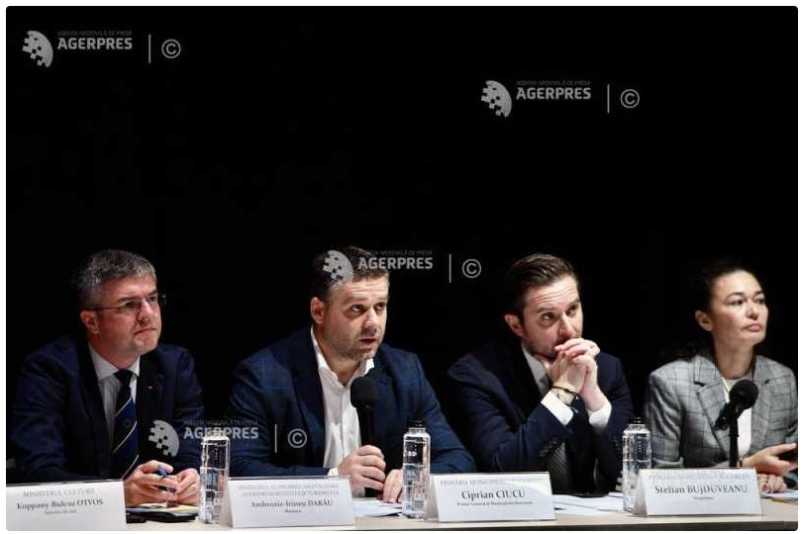
Bucharest General Mayor plans Destination Management Organisation for tourism promotion
Bucharest General Mayor Ciprian Ciucu said on Tuesday that he intends to establish the Bucharest Destination Management Organisation (DMO) by the end of the year, arguing that the Romanian capital has so far lacked a coherent tourism promotion strategy. 'Until now, Bucharest has not had a coherent promotion strategy, and through this Destination Management

Support for Ukraine conditional upon compliance with minorities protection standards (Senate)
Ukraine safeguarding the right to education in the mother tongue of Romanians amid the Ukrainian Parliament having recently passed a law on the use of the languages of national minorities in the education system, was the theme of a meeting of the Romanian Senate Foreign Policy Committee. Senior official Ana Tinca, on behalf of the Ministry of Foreign Affairs,
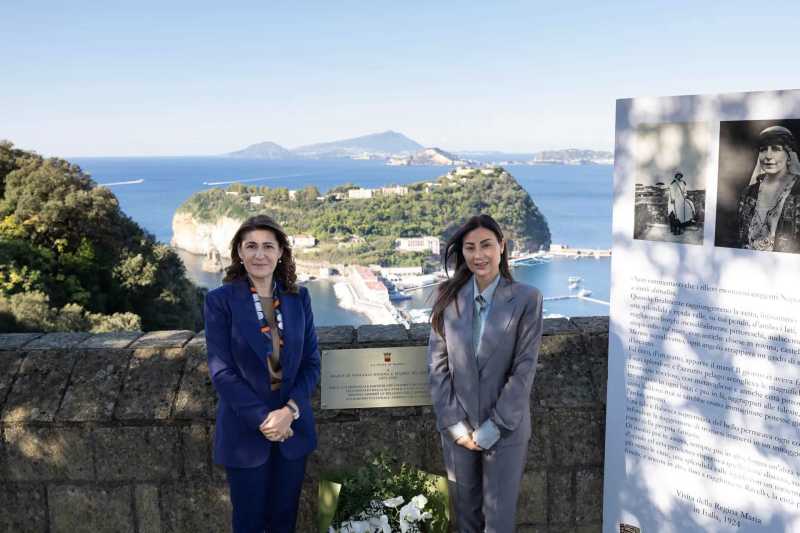
Queen Marie of Romania commemorated with plaque in Naples as part of Romania-Italy Cultural Year
Romania's ambassador to Italy, Gabriela Dancau, together with Romania's honorary consul general in Naples, Gilda Pacifico, and Naples Deputy Mayor Laura Lieto, on Tuesday attended the unveiling of a commemorative plaque dedicated to Queen Marie of Romania in Naples' Virgiliano Park. Located in one of Naples' most iconic public spaces on the Pos

Prime Minister-designate Niculescu: On Thursday I will submit to Parliament a gov't agenda, list of ministers
Prime Minister-designate Luca Niculescu has announced that on Thursday he will submit to Parliament a government agenda and the list of the cabinet of ministers. 'We ended today two days full of consultations with the parliamentary parties for the formation of the future government. I want to thank all parties and parliamentary groups for their time, for t

Romania, India eye swift signing of veterinary health certificates required for trade
President of the National Sanitary Veterinary and Food Safety Authority (ANSVSA) Alexandru Bociu and India's ambassador to Romania, Manoj Kumar Mohapatra discussed the prospect of the signing, within short, of the veterinary health certificates required for Romania - India trade exchanges. According to a post on the veterinary watchdog's Facebook page,
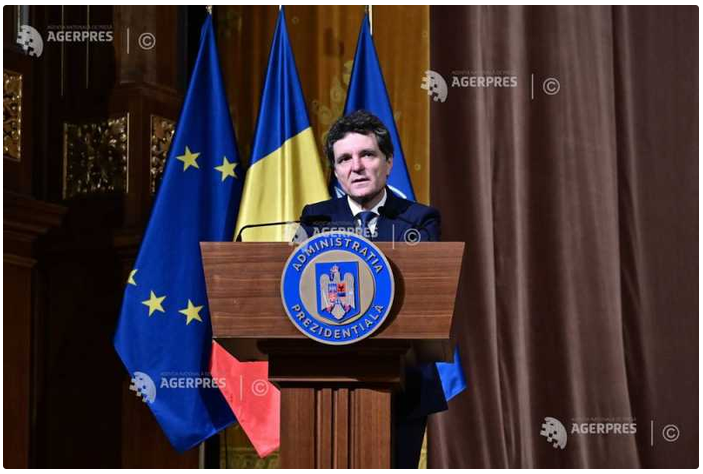
President Dan: New provisions in Ukraine establish that a mother tongue can be used in all instances
The new legal provisions in Ukraine clarify that a mother tongue can be used in all instances not only during school classes, President Nicusor Dan said on Tuesday, when he welcomed the promulgation by Volodymyr Zelenskiy of legislative amendments to the right of national minorities to mother tongue education. 'The new legislative provisions strengthen the

Ministry of Culture: Call for applications for national pre-selection for cultural competitions of Francophone Games
The Ministry of Culture announces the launch of a call for applications for the national pre-selection for the cultural competitions of the 10th edition of the Francophone Games - Yerevan, 2027. 'Do you sing, write, dance, create images, or bring stories to the stage? If you are between 18 and 35 years old, the Francophone Games could be an opportunity to
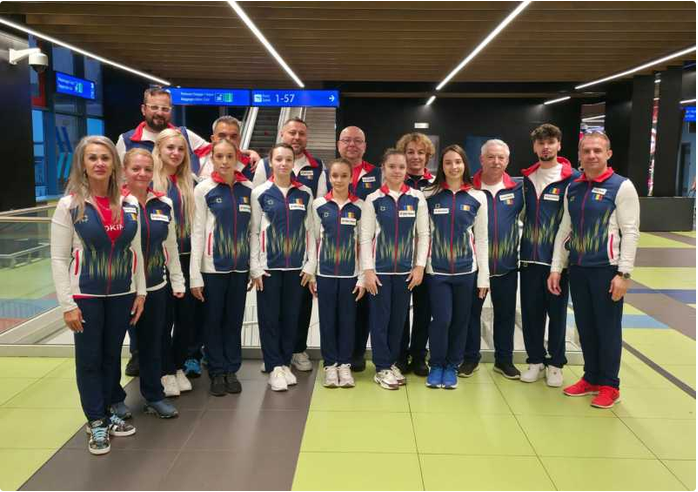
Seven gymnasts competing for Romania at 2026 Worlds in Rotterdam
Romania will be represented by seven athletes, six female and one male, at the 2026 World Artistic Gymnastics Championships, which will take place between October 17-25 in Rotterdam, the Netherlands, the Romanian Gymnastics Federation (FRG) announced on Tuesday. Performing for Romania in the women's competition will be Sabrina Maneca Voinea, Ariana Cotu, A

Ruxandra Donose, Paula Iancic, Teodor Ilincai to perform at Teatro di San Carlo in Naples
Mezzo-soprano Ruxandra Donose, soprano Paula Iancic and tenor Teodor Ilincai, accompanied by the Bucharest National Opera Orchestra conducted by Daniel Jinga, will perform on 22 October at the Teatro di San Carlo in Naples, the world's oldest opera house still in operation. ‘For the Bucharest National Opera Orchestra, the performance in Naples follow

PM-designate Niculescu: I am optimistic; all options remain on the table
Prime Minister-designate Luca Niculescu said on Tuesday, following discussions with representatives of the political parties and parliamentary groups on forming a government, that he is 'optimistic' and is not thinking about the possibility of a failure, mentioning that all options 'remain on the table,' namely a political, hybrid or technocratic government.