

Abortion rights: France leads the way with landmark constitutional change (enr)

In a pioneering move just in time for International Women's Day on March 8, French lawmakers have voted to enshrine abortion rights in the country's constitution. At the same time, politicians and experts warn that abortion rights are under pressure around the world. In Europe, abortion rights vary from country to country, with some more restrictive than others.
The French parliament on Monday voted to anchor the right to abortion in the constitution, making France the first country in the world to offer explicit protection for terminating a pregnancy in its basic law.
Abortions up to the 10th week of pregnancy have been allowed in France since 1975. Since then, the law has changed to allow women to have abortions up to the 14th week of pregnancy, and the costs of the procedure are covered by health insurance.
President Emmanuel Macron described the move as "French pride" that had sent a "universal message", and a special public ceremony is held to celebrate the move in Paris on International Women's Day on March 8.
France also intends to 'take this fight to the European level', said government spokeswoman Prisca Thevenot on Wednesday. "In 2022, the President of the Republic announced his intention to include the right to abortion in the Charter of Fundamental Rights of the European Union", the government spokeswoman said.
French lawmakers' decision came as EU member countries and lawmakers reached an agreement in February on the bloc's rules to tackle violence against women.
The World Health Organization (WHO) on Monday hailed the vote by French legislators. "We welcome France's decision to secure women's rights and save their lives," WHO chief Tedros Adhanom Ghebreyesus said in a post on X.
Following the French parliament's vote, however, the Vatican repeated its opposition to abortion. "The Pontifical Academy for Life recalls that in the era of universal human rights, there can be no 'right' to take a human life," the Vatican institution said in a statement, echoing concerns already raised by French Catholic bishops.
Reproductive rights under threat
Macron pledged last year to protect abortion in the constitution after the US Supreme Court in 2022 overturned the half a century old right to the procedure, allowing individual American states to ban or curtail it.
At the time, Greek Prime Minister Kyriakos Mitsotakis said he was "really troubled by the decision of the US Supreme Court. It is a major step back in the fights for women's rights," in a post on X (then Twitter).
French Prime Minister Gabriel Attal said the right to abort remained "in danger" worldwide, with our "freedoms in essence threatened... at the mercy of decision makers".
Conservative counter-campaigns are unravelling global advances in women's rights, the latest "backlash" in a series dating to the 1980s, activists and experts warned ahead of International Women's Day. Observers say advances in women's rights have been systematically followed by a backlash ever since the 1980s.
The "backlash" theory was detailed by American feminist Susan Faludi in her 1991 book: 'Backlash: The Undeclared War Against American Women'. It describes US conservative movements' strategy following the liberalisation of abortion laws and the first entry of women into the labour market in the 1970s.
Violence against women on the rise
Organised and politicised, the counter-movement unpicks abortion rights, fuels online hate and harassment and also encourages domestic violence, researchers say.
The EU agreed on its first-ever law to combat violence against women in February. The law seeks to protect women in the 27-nation European Union from gender-based violence, forced marriages, female genital mutilation and online harassment. The European Commission first proposed the major legislation on March 8, 2022, to mark International Women's Day.
However, the agreement failed to include a common definition of rape. Access to abortion should be available for rape victims, however a number of states worldwide restrict abortion even for cases of rape and incest. States in opposition of defining rape in the text argued that rape does not have the cross-border dimension necessary for it to be considered a crime that comes with common penalties in the bloc, thus questioning the EU's competence in the matter.
At the end of February, the 8th of March Institute, a Slovenian NGO, launched a campaign for safe and accessible abortion across Europe. The campaign, called 'My Voice, My Choice', aims to collect one million signatures across the EU, and it brings together organisations from Spain, France, Poland, Finland and Ireland.
The organisers have identified the issue as important ahead of the upcoming European elections and due to the rise of extremism in Europe. As in other countries, Slovenia is facing increased levels of violence against women and gender stereotyping in many areas.
Abortion rights across Europe
While abortion rights are increasingly under threat, European countries do have rules that allow the early termination of pregnancy - some, however, stricter than others. A selection of several countries shows their differences.
Albania: In Albania, abortion was allowed by law in the early 1990s, and the figures speak of a significant decrease in cases. Women's advocacy groups and public health specialists, however, have concerns about so-called sex-selective abortion. By even the most modest estimates Albania is "missing" thousands of girls, following years of sex-selective abortions that led to the termination of pregnancies by families hoping for male children. Despite a rise in awareness, deep-seated values seem hard to overturn - and experts warn that it could lead to social imbalance.
Bulgaria: Abortion on request in Bulgaria was legalised in 1956. In 1968, the government prohibited childless women from getting an abortion out of fear of depopulation. Other restrictions were also introduced throughout the years, but after the end of the communist regime in the country, abortion on request during the first trimester of pregnancy was allowed once again. Currently, a woman can choose to have an abortion by the end of the 12th week of pregnancy.
Czech Republic: The Czech Republic has had a law permitting abortion since 1957. In case of termination of pregnancy at the request of the mother, the latest date is the 12th week of pregnancy, and in case of genetic defects, the 24th week. Lawmakers' proposals to restrict abortions have not been successful. A crushing majority of Czechs are in favour of freedom of decision-making on abortion, a 2023 survey conducted by the Public Opinion Research Centre of the Czech Academy of Sciences (CVVM) showed.
Germany: Abortion is not fully legalised in Germany, but it remains unpunishable in the first twelve weeks if the woman receives counselling beforehand. However, the social-democratic SPD, the Greens and the liberal FDP parties in the German government are considering deleting article 218 from the penal code, in which it is currently included.
Italy: A law enacted in 1978 on the voluntary interruption of pregnancy has often been the focus of bitter controversies and harsh attacks in Italy. The law states that it is possible to have an abortion in a public health facility within the first 90 days of pregnancy only in particular "circumstances in which the continuation of pregnancy, childbirth or maternity would pose a serious danger to the woman's physical or mental health". The law also allows conscientious objection by doctors and nurses, making it harder to access abortion, of which Italy officially has one of the lowest rates in the world.
Poland: Abortion is currently permitted in Poland only if the pregnancy is the result of rape or incest or if it threatens the health or life of the mother. Poland's newly-formed coalition government wants to reverse a 2020 constitutional court ruling which demolished a decades-long abortion compromise, influenced by judges appointed by the then ruling socially-conservative Law and Justice (PiS) party, which led to a near-total ban on terminations.
Portugal: Abortion laws in Portugal were liberalised on April 10, 2007, allowing an elective abortion to be provided at a woman's request until the 10th week of pregnancy. Recently, the question of a new referendum on the right to abortion in Portuguese law has been raised during the political campaign by a candidate from Aliança Democrática (a coalition of three conservative parties) for the next legislative election taking place on March 10, but the subject has not been included by any of the political parties or coalitions running for parliament.
Romania: In Romania, abortion on demand is regulated by law (Penal Code) and can be performed up to the 14th week of pregnancy. Past this interval, the medical act is punishable by imprisonment or a fine and a ban on exercising certain rights, with some exceptions. For non-surgical abortion (with pills), the recommendations in the medical guidelines, corroborated with those in the pharmaceutical leaflets, provide for a limit of nine weeks. After more than nine weeks of pregnancy, this method is no longer used by doctors.
Slovenia: Slovenia is one of the few countries that have a constitutional right to freedom of parents to decide on the births of their children. As a result, abortion is legal and allowed in Slovenia, and the number of abortions is very low. However, the issue of abortion is frequently raised as a topic in political and civil society debates, particularly in the context of a perceived strengthening of more conservative views and initiatives on this issue.
Spain: In Spain, voluntary termination of pregnancy has been governed since 2010 by a law passed during the socialist government of José Luis Rodríguez Zapatero. The law was endorsed in 2023 by the Constitutional Court, which enshrined the right of women to decide "autonomously and without coercion" whether or not to continue with the pregnancy, a right enforceable by the public administration. It allows for a voluntary termination within the first 14 weeks of pregnancy. The law also recognises the possibility of interrupting a pregnancy until the 22nd week if there is "serious risk" of foetal pathology or when the mother's life is in danger.
Sweden: In Sweden, the government is investigating at the moment how to modernise the abortion law of 1975 to make it easier for women to do the abortions at home, in a safe manner. Most abortions are already only started in a clinic or hospital, with drugs given to the patients, but then finalised at home. Abortions have been legal in Sweden since 1938, with current laws allowing them up to the 18th week.
This article is published weekly. The content is based on news by AFP, Agerpres, AMNA, ANSA, ATA, BTA, CTK, dpa, EFE, Europa Press, Lusa, PAP, STA, TT participating in the enr.AGERPRES
The content of the www.agerpres.ro website has the exclusive purpose of public informing.
All the information published on this website by AGERPRES is protected by relevant legal dispositions.
It is forbidden to copy, reproduce, recompile, decompile, distribute, publish, display, modify, create derived components or products or full services, as well as any exploitation of the site's content.
Details in the section Terms of Use. If you are interested in picking up AGERPRES news items, please contact the Marketing Department – marketing@agerpres.ro.
The use of the Comments section entails your obligation to respect the AGERPRES terms and conditions in regards to the publishing of comments on the www.agerpres.ro.
Other news in category

Volker Reiter: This year's ProEtnica Festival was saved by minority organisations and participants
The 22nd edition of the ProEtnica Intercultural Festival, which opened on Wednesday in the Medieval Citadel of Sighisoara, marking 25 years since its establishment, was saved by national minority organisations and participants, Volker Reiter, director of the Interethnic Educational Centre for Youth (ibz) Sighisoara, said at the opening ceremony. 'I do not

Romania's first Parasport Games to bring together more than 300 athletes
More than 300 athletes will take part in the first edition of the Parasport Games Romania, a multisport competition bringing together 10 disciplines and due to be held at seven sports venues in Bucharest from September 1 to 5, President of the Romanian Paralympic Committee Eduard Novak announced at a press conference on Wednesday. 'September 1 is the Offic

Interim ForMin Toiu meets Romanian community in Frankfurt, Bonn, Wiesbaden, Hesse
Interim Foreign Affairs Minister Oana Toiu paid a visit to Germany on Tuesday, travelling to Bonn, Frankfurt and Wiesbaden, where she met with representatives of the Romanian community, Romanian entrepreneurs and German officials, according to the Foreign Affairs Ministry (MAE). In Wiesbaden, Oana Toiu held a meeting with Manfred Pentz, Minister of Federal, Eu
Romania receives first EUR2.5 billion payment under SAFE defence instrument
Romania on Wednesday received its first payment of EUR2.5 billion under the Security Action for Europe (SAFE) defence instrument, representing 15% of its total allocation of EUR 16.7 billion, the European Commission reported on Wednesday. According to a European Commission press release, SAFE is a EUR150 billion financial instrument providing loans to member s

'Bridging Cultures' - musical bridge between Oradea and Debrecen
A series of music and cultural events will bring together artists from Oradea and Debrecen as part of the cross-border 'Bridging Cultures' project, dedicated to the 250th anniversary of the establishment of the Greek-Catholic Diocese of Oradea, which will be marked next year. The project will run for one year and was initiated by the Greek Catholic Dio
Mungiu's 'Fjord' to be presented at Oslo/PIX Film Festival
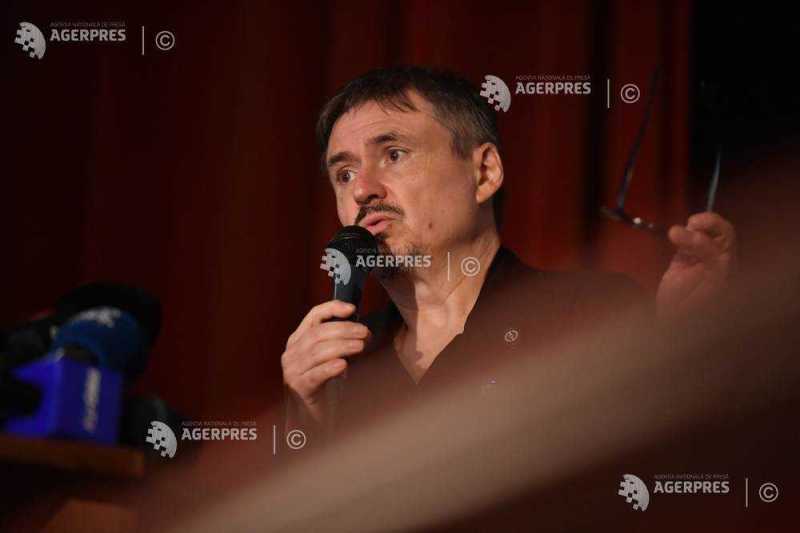
'Fjord,' directed by Cristian Mungiu and winner of the Palme d'Or at the 2026 Cannes Film Festival, will close the Oslo/PIX Film Festival, a film event taking place in the Norwegian capital until 30 August. According to a press release sent by the Romanian Cultural Institute (ICR) on Wednesday, the film will have three screenings attended by the di

Bucharest National Theatre - new repertory strategy, structured around seven major programmes
The new repertory strategy of the 'I.L. Caragiale' National Theatre (TNB) in the capital will be structured around seven major programmes, with the aim of strengthening its status as Romania's leading stage. According to a TNB release sent to AGERPRES on Wednesday, the main aim of the new strategy is to establish a permanent and open dialogue with
CFA Romania's Codirlasu: Confidence indicator rose in July, with the risk of recession remaining
The confidence indicator rose in July, amid the confirmation of Romania's investment-grade rating by rating agencies, but the economy will continue to stagnate, pointing to a high risk of recession, according to Adrian Codirlasu, President of CFA Romania. 'The confidence indicator rose in July, amid the confirmation of Romania's investment-grade ra
INS: Wholesale trade turnover up 0.8% in first half of 2026
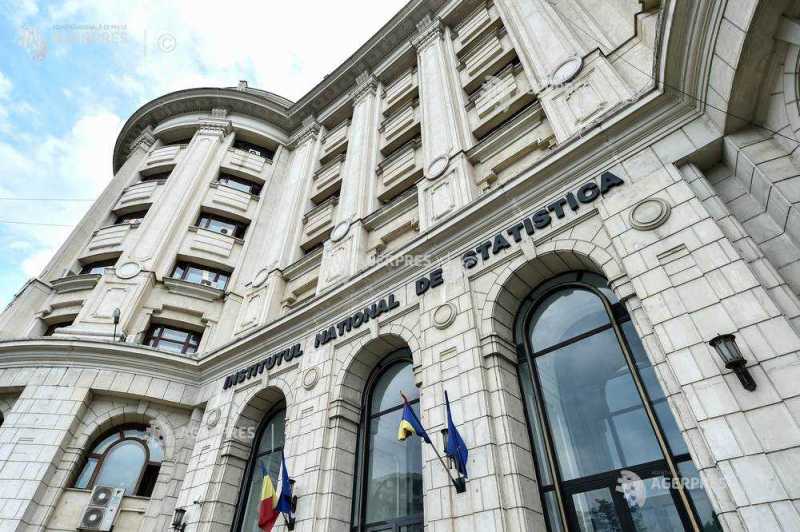
Turnover in wholesale trade (except trade in motor vehicles and motorcycles) increased in the first half of this year, both as gross series (+0.8%) and as a series adjusted according to the number of working days and seasonality (+0.6%), compared with the same period in 2025, according to the National Institute of Statistics (INS) data published on Wednesday.

Interim PM Bolojan estimates special-authorisation medicines issue to be resolved within days
Interim Prime Minister Ilie Bolojan estimates that all the issues related to the supply of medicines which require special authorisations for cancer patients should be resolved within a few days. 'I understand for the House [National Health Insurance House] - because I have sought to keep informed and see what the issues are at all times - most of them, ov

Gov't to launch selection process for new Nuclearelectrica CEO after Cosmin Ghita's resignation
Following Cosmin Ghita's announcement that he resigns as Nuclearelectrica CEO, the government said that after the notice period, a selection process will be launched to appoint a new head of the nuclear power producer. Government spokesperson Ioana Dogioiu said on Tuesday that 'resignation is a unilateral act of will' and that Ghita's contract
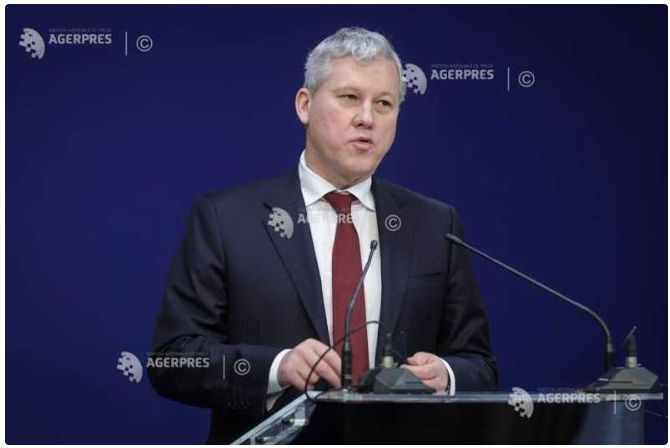
IntMin Predoiu hails seizure of 1.7 tonnes of high-risk drugs as major Interior Ministry success
The seizure of 1.7 tonnes of high-risk drugs in recent days is an important success for the Interior Ministry and the Romanian Police's anti-drug units, acting Minister of the Interior Catalin Predoiu said on Tuesday. He noted that combating drug trafficking has been a priority for the Ministry ever since he took over the portfolio. 'We
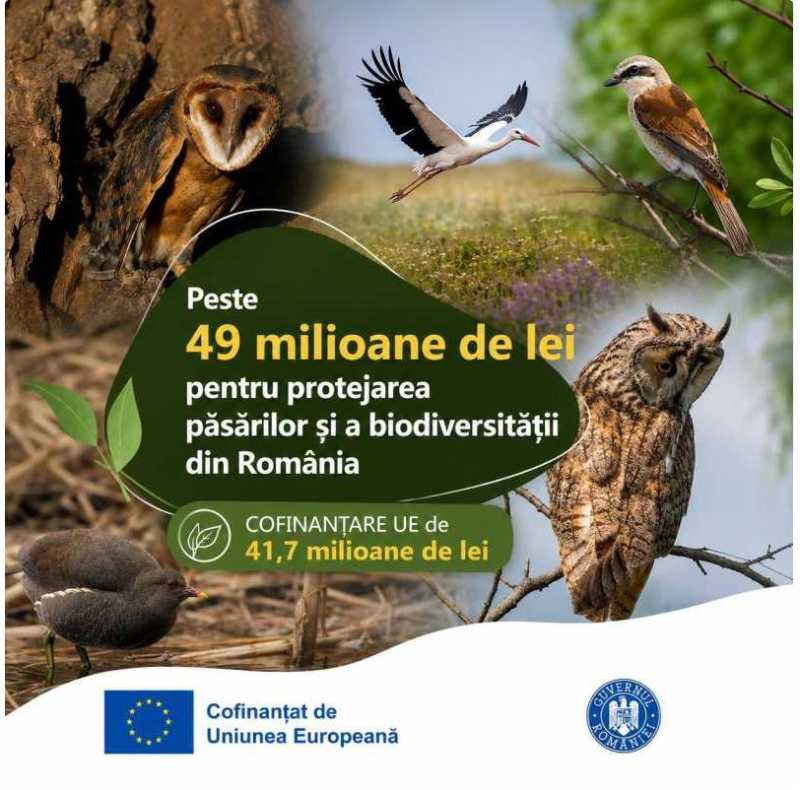
Environment Ministry signs RON 49 mln bird-monitoring project to strengthen national conservation system
The Ministry of Environment, Waters and Forestry (MMAP) has signed the financing contract for a RON 49-million project aimed at strengthening the national system for managing and monitoring Romania-based bird species. Of the total value, RON 41.7 million come from EU co-financing. Running from 2025 to 2029 under the Sustainable Development Programme, the proje
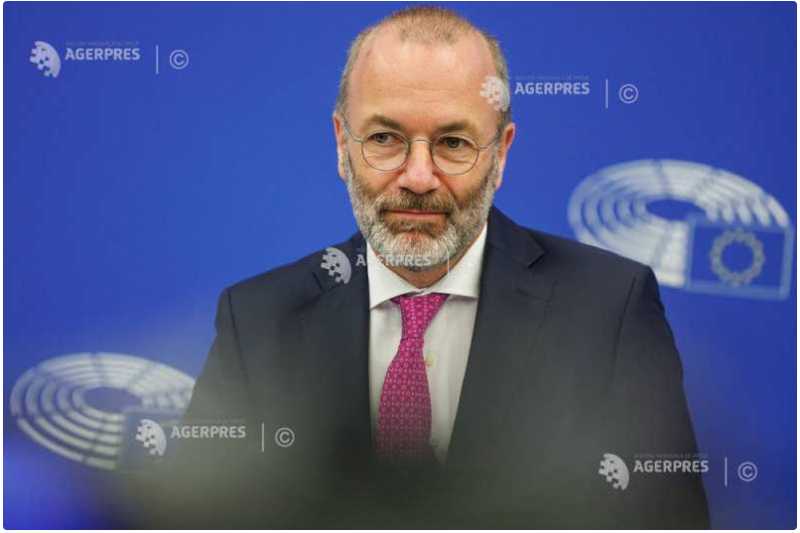
EPP, Renew urge EC to warn Romania that 'Fritz amendment' endangers €770 mln RRF tranche
The European Parliament's European People's Party (EPP, centre-right) and Renew Europe (liberal) groups have urged European Commission President Ursula von der Leyen to make clear to Romania that the disbursement of funds under the National Recovery and Resilience Plan (NRRP) is conditional on implementing reforms in full compliance with the rule of law, EU law, huma

Petrescu (ASF): Romania's capital market moving ever closer to international investment circuit
Two new companies listed on the Bucharest Stock Exchange (BVB) will be included in the FTSE Global All Cap index starting September 21—a move that further confirms the development of Romania's capital market and its integration into the international investment landscape, according to Alexandru Petrescu, Chairman of the Financial Supervisory Authority (ASF).