

REVOLUTION 30: What happened in Timisoara, over December 16-20, 1989

The year 1989 meant the end of the communist regime in the Central and Eastern European countries. Romania was the only ex-communist country in the case of which the switch to democracy was violent, involving protests and street fights, and the only country where the leaders of the former regime got executed. The spark that ignited the fire that burnt the dictatorship of Nicolae Ceausescu first appeared in Timisoara. The so-called "Timisoara Revolution" took place between December 16 and December 20, 1989, with December 21 becoming the first day of the Bucharest Revolution.
***
On December 16, 1989, the Revolution that led to the fall of the communist regime in Romania started in Timisoara, according to the volume "Romania 1989-2005. A Chronological History" by Stan Stoica (Meronia Publishing House, 2005).
On that day, many believers in the city were protesting peacefully around the reformed Cathedral in the Maria Square, against a court decision by which reformed priest László Tokés was supposed to be evacuated and moved to another locality. The movement got bigger, as increasingly more people, students, workers, locals in general, joined the protest. Several rows of locals headed downtown. And this is how the anti-communist revolution started, on the background of a dramatic drop in the living standards and the fall of the European communist system in the former socialist countries, as the work "Romanian History in Data" (Enciclopedica Publishing House, 2003) mentions.
In a short while, there were several hundreds of people gathered in the Maria Square, chanting slogans like "Liberty," "Justice," and singing "Wake Up, Romanian!." The lines of protesters headed to the County Committee of the Romanian Communist Party (PCR). The Ministry of Interior, the Militia, the army, the patriotic guards, the firefighters were being mobilized. The protesters were met with water canons and tear gas. The demonstrators and the law enforcement forces clashed. Arrests were made. The demonstrators withdrew and they gathered in front of the Cathedral. The people started to march again through the city and they were once more attacked by the law enforcement forces; there were real fights; many of the protesters got arrested.
Around 4 pm, more trams were blocked by protesters chanting "Down with Ceausescu!." Part of the crowd headed to the student centres to convince more people to join. Until midnight, some of the protesters, priest László Tokés included, were beaten and arrested.
On the second day, December 17, 1989, even more locals took to the streets to protest; they were joined by the workers from the factories and plants. The crowd chanted: "Down with Ceausescu!," "Down with Communism!," "Don't Be Afraid." The County Committee of the PCR was taken by "assault" by the demonstrators, who got into the building through the broken windows. The army stepped in.
By order of Nicolae Ceauescu, General Velicu Mihalea, Deputy Chief of the Counter-intelligence Directorate of the State Security Department (DSS), Colonel Filip Teodorescu from the 3rd Counter-intelligence Division of the DSS and other high-ranked officers were sent to Timisoara, to help the local and county leaders. Ion Coman, Secretary of the Central Committee of PCR was appointed single commander for Timisoara. He went to Timisoara accompanied by General Stefan Gusa, Victor Atanasie Stanculescu, Miuhai Chitac, Florea Comsa, Colonel Gheorghe Radu etc, to coordinate the repressive actions. At midnight, the law enforcement opened fire against the protesters; they killed and wounded children, young people, women and elderly. More than 20,000 members of the "patriotic guards" from Dolj and Ramnicu Valcea counties were sent by special trains to Timisoara; they carried canes as weapons and their mission was to help scatter the crowd. The action failed. Part of them joined the protesters and another part was stopped somewhere on the road and returned home.

On the same day, Nicolae Ceausescu called a teleconference with the party officials in the counties and announced them he gave the order to the law enforcement forces to shoot the demonstrators. "We are facing a state of necessity, and we need to apply the law to anybody who refuses to answer to the call of the law enforcement bodies," the communist leader threatened. All the factories and institutions in the country were being guarded 24 hours a day, security measures were strengthened, the atmosphere got more intense, even explosive. Squadrons made of a militiaman, a soldier and a member of the patriotic guards were patrolling on the streets.
The first gun shots were then heard in Timisoara, with street fights continuing in the city after midnight, between the civilians and the army, with tanks and shops being set afire. Moreover, on the steps of the Cathedral, a group made of children and young civilians started chanting: "Down with Ceausescu!," "We Want a Free Country!". They also sang Christmas carols, being joined by several hundreds protesters, and waved the Romanian flag with the communist emblem removed.
While on December 18, 1989, Nicolae Ceausescu started his official visit to the Islamic Republic of Iran, in Timisoara people broke the windows of the stores, the militiamen were everywhere and the military ordered people to never stop moving, and never gather in groups.
After two days of failed attempts by the militia, the army, and the intelligence service to repress the revolt, the protesters occupied, on December 19, 1989, Timisoara's downtown Opera Square. Most factories in Timisoara closed their gates, organised protests, made claims. On the streets, the soldiers made peace with the revolutionaries, who chanted "The Army is With Us!."
More than 40 dead bodies of victims in Timisoara, unidentified, were carried in secret from the mortuary of the Timis County Hospital to Bucharest, where, on the night between December 19 and 20, and they were burnt at the "Cenusa" Crematory.
On December 20, 1989, the protesters in Timisoara created the group called the Romanian Democratic Front, led by Lorin Fortuna (President), Ioan Chis (Deputy President) and Claudiu Iordache (Secretary General), while intending to organise the resistance movement. In the morning, tens of lines of workers from the factories in the city headed to Opera Square. Around 11.00 am, General Stefan Gusa ordered the soldiers to go back to their garrison and banned them from using their weapons. Around 1.00 pm, the columns of protesters reached the Opera Square and the soldiers joined them. At 2.00 pm, the soldiers were back in the garrison and the central and local authorities gave up controlling the city. Timisoara became thus the first free city of Romania.
In the balcony of the Opera, the Timisoara Mayor, Petre Mot, received the protesters' claims: to free those who were arrested, to return the dead bodies to their families, Nicolae Ceausescu to resign, free movement of the people and of the ideas. The crowd chanted: "We won't leave, the dead don't let us," "Today in Timisoara, tomorrow in the whole country!."
The headquarters of the County Committee of the PCR is surrounded by workers. in trying to solve the crisis, communist leaders Emil Bobu and Constantin Dascalescu met with a delegation of the protesters. Ceausescu's messengers, terrified by the claims (Ceausescu's and the government's resignation) returned in a hurry to Bucharest.
Nicolae Ceausescu returned from his official visit to Iran and established a state of necessity. During his televised speech, he said "hooligans (...) caused destructions of a Fascist type meaning to destabilize the country, to dismantle the territory, to put an end to the socialist revolution and place us under foreign rule again." At the same time, Ceausescu blamed everything on the "foreign intelligence services and the inside Romanians who sold their country for a handful of dollars or other foreign currencies."
The mass media controlled by the government never broadcast or wrote anything about what happened in Timisoara, but people did find out through the Romanian language broadcasts of the main Western radio stations and also through Budapest and Belgrade-based broadcasts. The only indirect account of the Timisoara events were the gatherings organised hastily in the institutions and factories, by which "the workers voiced their 'determination' to defend "the conquests of socialism!."
On December 20, 1989, a Presidential Decree was issued by which a state of necessity was established in the Timis County, because of the "serious violation of public order through terrorist acts, vandalism and destruction of community assets." The municipal committee of the party announced the organisation of a great meeting in the Palace Square, where it hoped that Bucharest would condemn "the hooligan actions" of Timisoara.
*The material is based on chronologies and specialised studies related to the Romanian Revolution of 1989: "Romanian History in Data" - Enciclopedica Publishing House, 2003, and "Romania 1989-2005. A Chronological History" by Stan Stoica - Meronia Publishing House, 2005. AGERPRES (RO - Documentary - Cristian Anghelache, Editors of the Photo Archive: Mihaela Tufega; editor: Mariana Zbora-Ciurel; EN - author: Cristina Zaharia, editor: Adina Panaitescu)
The content of the www.agerpres.ro website has the exclusive purpose of public informing.
All the information published on this website by AGERPRES is protected by relevant legal dispositions.
It is forbidden to copy, reproduce, recompile, decompile, distribute, publish, display, modify, create derived components or products or full services, as well as any exploitation of the site's content.
Details in the section Terms of Use. If you are interested in picking up AGERPRES news items, please contact the Marketing Department – marketing@agerpres.ro.
The use of the Comments section entails your obligation to respect the AGERPRES terms and conditions in regards to the publishing of comments on the www.agerpres.ro.
Other news in category
Romanian Academy to host '80 Years Since the Famine in the Moldavian SSR' session, exhibition
The Romanian Academy will organise a commemorative session and an exhibition next Tuesday to mark 80 years since the famine in the Moldavian SSR (1946-1947). Organised by the National Institute for the Study of Totalitarianism (INST), the two events, entitled '80 Years Since the Famine in the Moldavian SSR (1946-1947). The Memory of a Tragedy' and '
UPDATE/SRI: Bomb threat on aircraft landed on Otopeni Airport; threat not confirmed after specialist inspection
A crisis response unit was set up at Otopeni Airport on Thursday after a bomb threat was reported on an aircraft that had arrived from Milan, but the threat was not confirmed after the pyrotechnist inspection, the Romanian Intelligence Service (SRI) said. 'The control tower of Bucharest's 'Henri Coanda' International Airport was notified by the
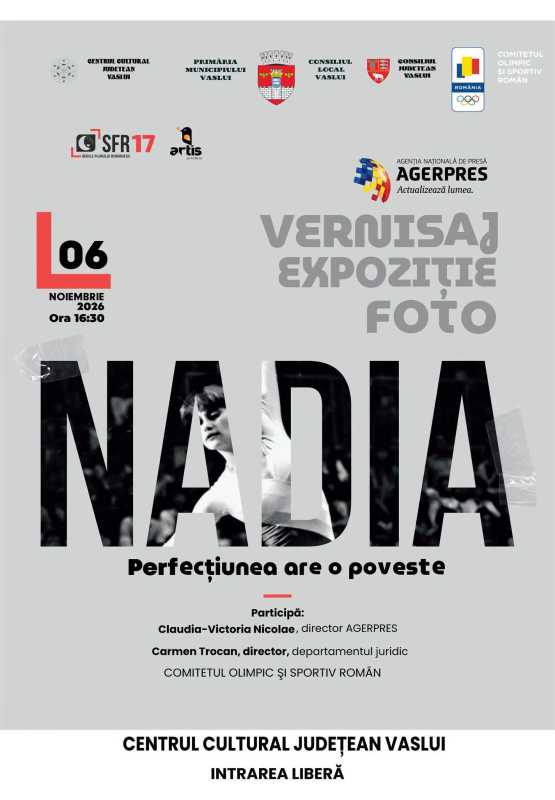
'Nadia. Perfection Has a Story' AGERPRES exhibition to open Vaslui Education Excellence Gala on Friday
'Nadia. Perfection Has a Story' AGERPRES exhibition will open in Vaslui on Friday, 6 November, ahead of the Education Excellence Gala, an annual event awarding pupils who have achieved outstanding results in school competitions. The exhibition will be hosted by the Vaslui County Cultural Centre. 'We very much wanted to mark an import

Senate's Abrudean meets US defence official: strategic partnership anchors Romania's security
Senate President Mircea Abrudean met on Thursday at the Senate with US Under Secretary of Defence for Policy Elbridge Colby to discuss Black Sea security and the need for NATO allies to assume an active and sustainable role in their own defence, noting that the Strategic Partnership with the United States remains an anchor of Romania's security and stability.
UMPCD ranks first among Romanian universities in CWTS Leiden Ranking
The University of Medicine and Pharmacy 'Carol Davila' Bucharest (UMPCD) ranks first among Romanian universities in the international CWTS Leiden Ranking 2026, both in the overall ranking and in the Biomedical and Health Sciences field, where it maintains its position as the national leader. According to the UMPCD release, this year's edition of th
SRI: Bomb threat on aircraft landed on Otopeni Airport; bomb disposal team inspecting aircraft
A crisis response unit was set up at Otopeni Airport on Thursday after a bomb threat was reported on an aircraft that had arrived from Milan, the Romanian Intelligence Service (SRI) said. 'The control tower of Bucharest's 'Henri Coanda' International Airport was notified by the crew of the Wizz Air aircraft arriving from Milan, which landed at
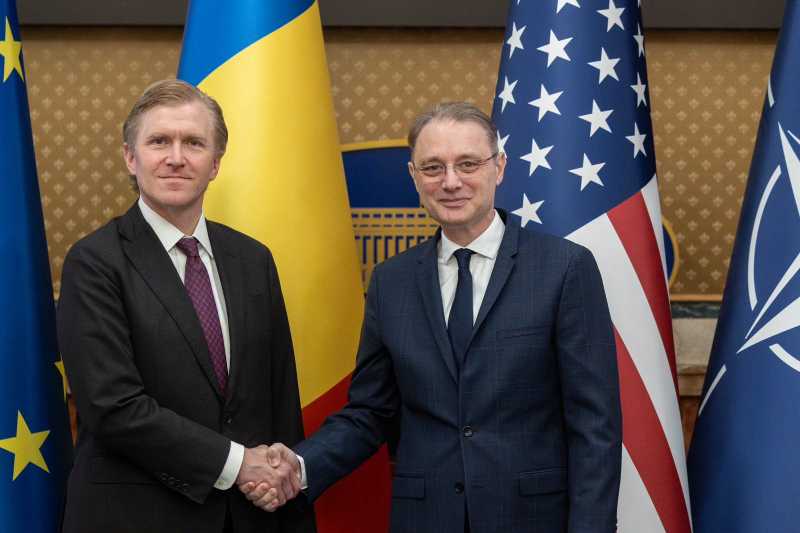
PM Niculescu, US Under Secretary of War for Policy discuss Strategic Partnership strengthening
Prime Minister Luca Niculescu met at Victoria Palace on Thursday with Under Secretary of War for Policy Elbridge Colby, who is paying a visit to Romania. According to a Government press release, the substantive talks focused on practical ways to deepen the Strategic Partnership between Romania and the United States, with particular emphasis on defence, the key
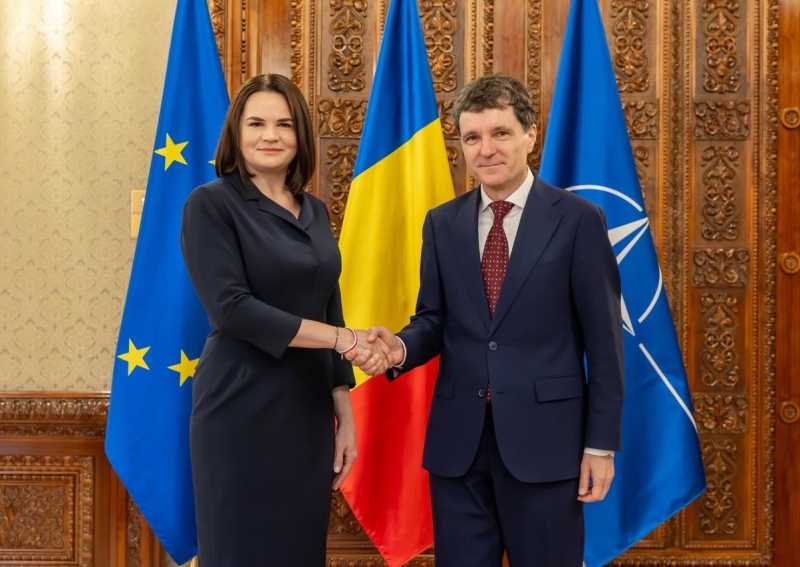
President Dan: The fortitude of the Belarusian people deserves our respect and our support
The fortitude of the Belarusian people deserves the respect and support of Romania and its allies, President Nicusor Dan conveyed on Thursday, following his meeting, the previous day, with Sviatlana Tsikhanouskaya, leader of the democratic opposition in Belarus. 'Yesterday I welcomed Sviatlana Tsihanouskaya, leader of the Belarusian democratic opposition,
Brukenthal Museum's dinosaur exhibits come to life thanks to AI technology
The Brukenthal National Museum in Sibiu is continuing to use artificial intelligence to promote its collections, this time unveiling a Facebook video in which the dinosaur replicas displayed in the courtyard of the Natural History Museum appear to come to life. Using AI technology, the museum has animated the dinosaurs exhibited at its Natural History Museum o

Defence Minister Oprea, U.S. Under Secretary Colby hold talks on Black Sea security
Romanian Minister of National Defence Radu Oprea met on Wednesday with U.S. Under Secretary of War for Policy Elbridge Colby, with talks focusing, among other topics, on security developments in the Black Sea region and strengthening the deterrence and defence posture of allies on NATO's eastern flank. According to a press release sent by the Ministry of N
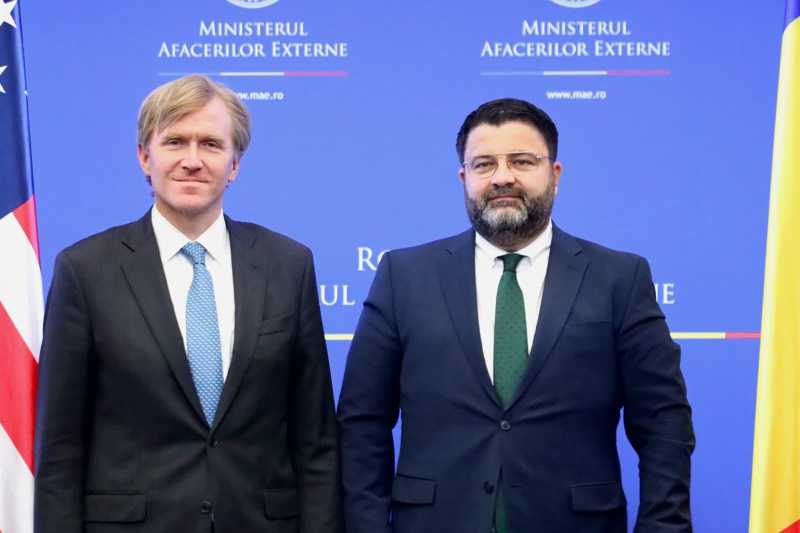
ForMin Neculaescu tells U.S. Defence Under Secretary Colby: Romania is stepping up its contribution to NATO 3.0
Foreign Minister Dan Neculaescu met on Wednesday at the seat of the Ministry of Foreign Affairs (MAE) with U.S. Under Secretary of War for Policy Elbridge Colby, and told the American official that 'Romania is stepping up its contribution to a NATO 3.0.' 'I welcomed today at the Ministry of Foreign Affairs U.S. Under Secretary of War for Policy Elb
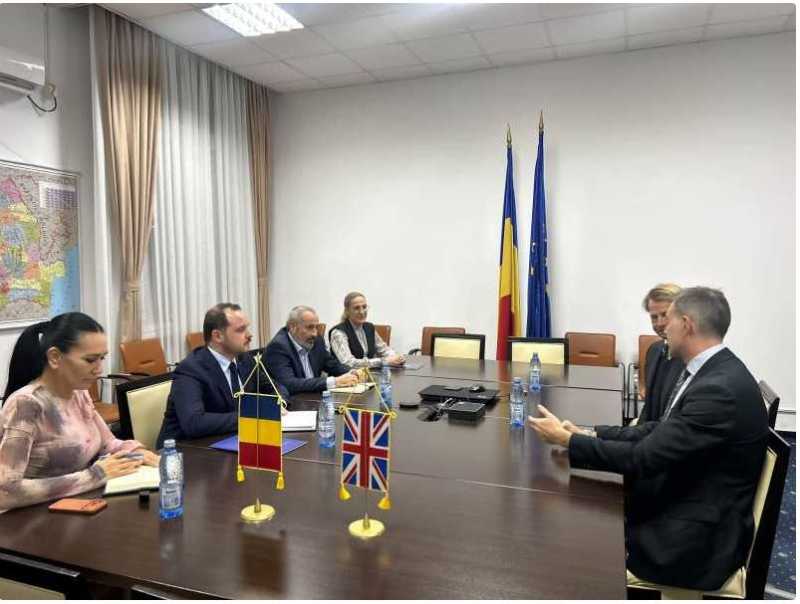
HealthMin Rogobete meets British Ambassador: Romania needs investments and solid partnerships
Romania needs investments, solid partnerships, and an openness to international experience, stated Minister of Health Alexandru Rogobete, who met on Wednesday with the British Ambassador to Romania, Giles Portman. According to the health minister, the discussions focused on the development of medical services and the strengthening of cooperation between the tw
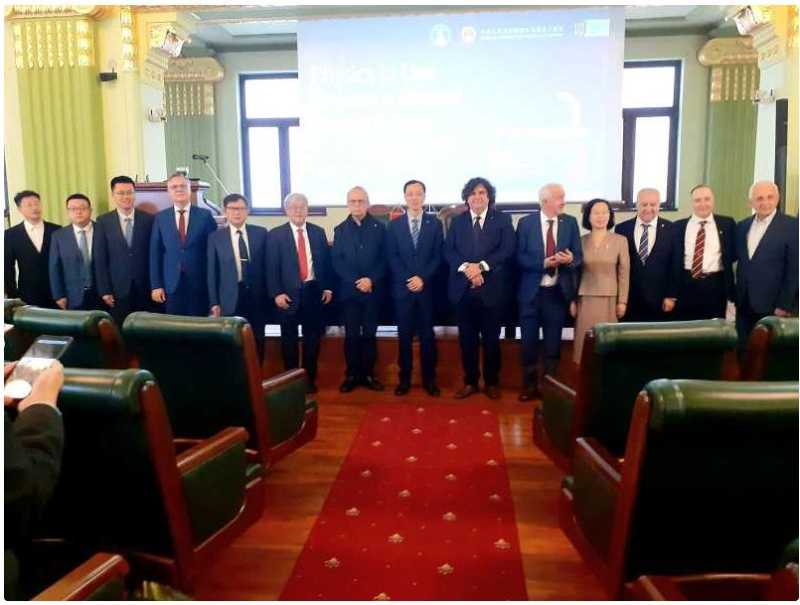
Romania-China Forum/Calin Ur (ELI-NP): Our research centre is built for the next generation
Researcher Calin Ur, director of the Extreme Light Infrastructure - Nuclear Physics (ELI-NP) project, known as the Magurele laser facility, told AGERPRES on Wednesday that the research centre is now operational but has been built for the next generation, making it essential to attract more bright, passionate young people interested in pursuing careers at the institute.
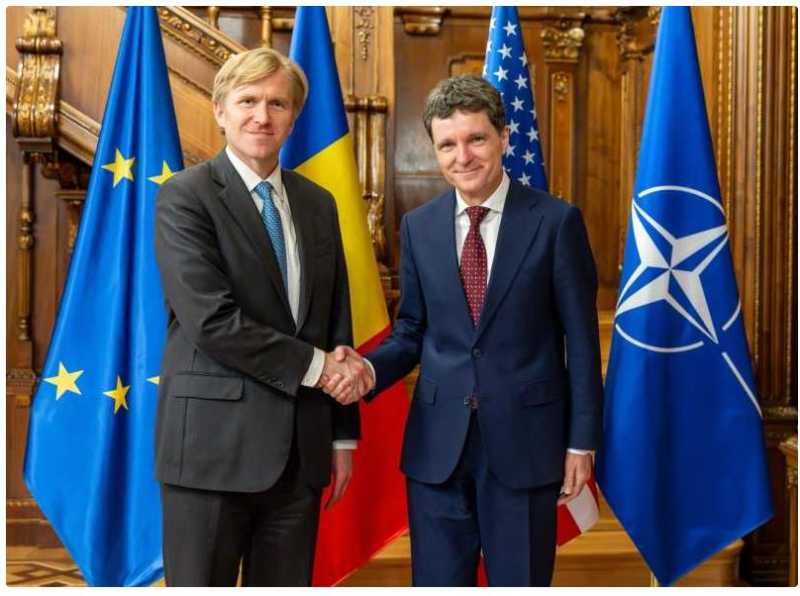
Nicusor Dan and Elbridge Colby discuss security in Black Sea region at Cotroceni Palace
President Nicusor Dan held discussions with U.S. Deputy Assistant Secretary of Defense for Strategy and Force Development Elbridge Colby on security in the Black Sea region and the need for joint transatlantic action to address existing threats, on Wednesday, at Cotroceni Palace. 'We discussed security in the Black Sea region, Romania's efforts to prom

Four employees and two companies, including Distrigaz, indicted in Rahova apartment block explosion case
The Prosecutor's Office attached to the Bucharest Court of Appeal has indicted four employees and two companies, including gas distributor Distrigaz, on charges of negligent destruction resulting in a disaster in connection with an October 2025 apartment block explosion in Bucharest's Rahova district that killed four people. The defendants include two